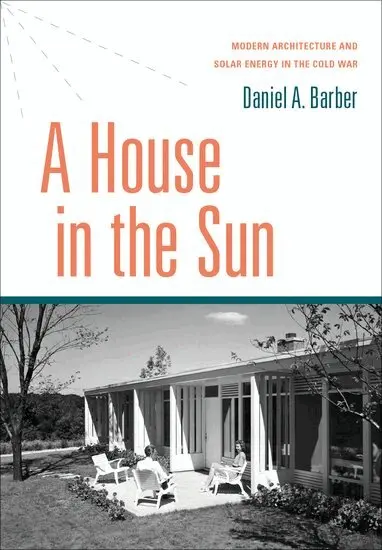
A House in the Sun
- Vikt 0,98 kg
1 054 krhos Bokus · exkl. frakt
315 kr skillnad mellan billigaste och dyraste butik i lager
Dubbelkollat idag
Jämför 2 butiker
- Bokus, 1 054 kr, frakt enligt butiken. Till butik (öppnas i ny flik)
I lagerFrakt: se butikenDubbelkollad 05:51
1 054 kr
Lägst
- Akademibokhandeln, 1 369 kr, frakt enligt butiken. Till butik (öppnas i ny flik)
I lagerFrakt: se butikenDubbelkollad 05:53
1 369 kr

Priser från butikernas flöden kan ha ändrats: det är priset hos butiken som gäller, så kontrollera det innan du handlar.
Prishistorik
Köp nu eller vänta?
Just nu kostar produkten 1 054 kr — 23 kr över det lägsta vi sett på 1 månad.
Pris idag
1 054 kr
- Lägst
- 1 031 kr
- Snitt
- 1 042 kr
- Högst
- 1 054 kr
| 2026-09-15 | 1 031 kr · Lägst hos Bokus |
|---|---|
| 2026-10-11 | 1 054 kr · Lägst hos Bokus |
Om produkten
A House in the Sun
Läs merLäs mindre
A House in the Sun describes a number of experiments in solar house heating in American architectural, engineering, political, economic, and corporate contexts from the beginning of World War II until the late 1950s. Houses were built across the Midwest, Northeast, and Southwestern United States, and also proposed for sites in India, South Africa, and Morocco. These experiments developed in parallel to transformations in the discussion of modern architecture, relying on new materials and design ideas for both energy efficiency and claims to cultural relevance. Architects were among the myriad cultural and scientific actors to see the solar house as an important designed element of the American future. These experiments also developed as part of a wider analysis of the globe as an interconnected geophysical system. Perceived resource limitations in the immediate postwar period led to new understandings of the relationship between energy, technology and economy. The solar house - both as a charged object in the milieu of suburban expansion, and as a means to raise the standard of living in developing economies - became an important site for social, technological, and design experimentation. This led to new forms of expertise in architecture and other professions. Daniel Barber argues that this mid-century interest in solar energy was one of the first episodes in which resource limitations were seen as an opportunity for design to attain new relevance for potential social and cultural transformations. Furthermore, the solar discussion established both an intellectual framework and a funding structure for the articulation of and response to global environmental concerns in subsequent decades. In presenting evidence of resource tensions at the beginning of the Cold War, the book offers a new perspective on the histories of architecture, technology, and environmentalism, one more fully entangled with the often competing dynamics of geopolitical and geophysical pressures.
Specifikationer
Fakta
- Vikt
- 0,98 kg
- GTIN
- 09780199394012
Uppgifter från tillverkare och butiker.