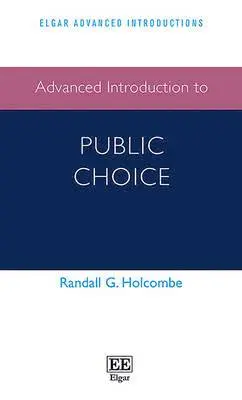
Advanced Introduction to Public Choice
339 krhos Bokus · exkl. frakt
100 kr skillnad mellan billigaste och dyraste butik i lager
Dubbelkollat idag
Jämför 2 butiker
- Bokus, 339 kr, frakt enligt butiken. Till butik (öppnas i ny flik)
I lagerFrakt: se butikenDubbelkollad 05:51
339 kr
Lägst
- Akademibokhandeln, 439 kr, frakt enligt butiken. Till butik (öppnas i ny flik)
I lagerFrakt: se butikenDubbelkollad 05:53
439 kr

Priser från butikernas flöden kan ha ändrats: det är priset hos butiken som gäller, så kontrollera det innan du handlar.
Prishistorik
Köp nu eller vänta?
Just nu kostar produkten 339 kr — 4 kr över det lägsta vi sett på 1 månad.
Under den tiden har det oftast legat runt 340 kr.
Pris idag
339 kr
- Lägst
- 335 kr
- Snitt
- 337 kr
- Högst
- 340 kr
| 2026-09-15 | 335 kr · Lägst hos Bokus |
|---|---|
| 2026-09-18 | 337 kr · Lägst hos Bokus |
| 2026-09-19 | 336 kr · Lägst hos Bokus |
| 2026-10-02 | 337 kr · Lägst hos Bokus |
| 2026-10-03 | 338 kr · Lägst hos Bokus |
| 2026-10-10 | 340 kr · Lägst hos Bokus |
| 2026-10-11 | 339 kr · Lägst hos Bokus |
| 2026-10-12 | 337 kr · Lägst hos Bokus |
| 2026-10-16 | 339 kr · Lägst hos Bokus |
| 2026-10-17 | 338 kr · Lägst hos Bokus |
| 2026-10-22 | 337 kr · Lägst hos Bokus |
| 2026-10-24 | 338 kr · Lägst hos Bokus |
| 2026-10-27 | 339 kr · Lägst hos Bokus |
Om produkten
Advanced Introduction to Public Choice
Läs merLäs mindre
Elgar Advanced Introductions are stimulating and thoughtful introductions to major fields in the social sciences and law, expertly written by the world's leading scholars. This Advanced Introduction presents a focused narrative about political decision-making based on the work that has defined public choice as a discipline. Randall G. Holcombe emphasizes the theoretical foundations of Public Choice, examining the way that voter preferences are aggregated through democratic decision-making, the way that political exchange leads to the production of public policy, and the way that the constitutional framework within which political activity takes place is designed. He provides a concise discussion of the main models of Public Choice in an engaging manner, giving readers a foundation for understanding the theoretical and empirical work in the field. Each chapter ends with a Notes section that discusses the research on which the chapter is based, with an emphasis on the pioneering work that has shaped the development of Public Choice.Undergraduate and graduate level students in economics, political science and public administration will find this introduction an essential resource for understanding political decision making. Instructors in those fields will find this book a useful and affordable text and an indispensable resource for teaching Public Choice.