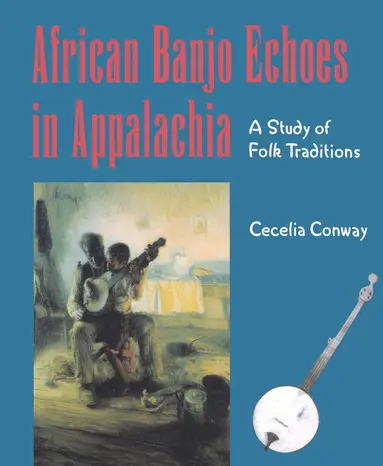
African Banjo Echoes in Appalachia
- Vikt 0,79 kg
340 krhos Bokus · exkl. frakt
99 kr skillnad mellan billigaste och dyraste butik i lager
Dubbelkollade priser
Jämför 3 butiker
- Bokus, 340 kr, frakt enligt butiken. Till butik (öppnas i ny flik)
I lagerFrakt: se butikenDubbelkollad 05:51
340 kr
Lägst
- Akademibokhandeln, 439 kr, frakt enligt butiken. Till butik (öppnas i ny flik)
I lagerFrakt: se butikenDubbelkollad 05:53
439 kr
- Adlibris, 303 kr, frakt enligt butiken. Till butik (öppnas i ny flik)
Slut i lagerFrakt: se butikenDubbelkollad 27 okt. 09:10
303 kr


Priser från butikernas flöden kan ha ändrats: det är priset hos butiken som gäller, så kontrollera det innan du handlar.
Prishistorik
Köp nu eller vänta?
Just nu kostar produkten 340 kr — 37 kr över det lägsta vi sett på 1 månad.
Under den tiden har det oftast legat runt 300–340 kr.
Pris idag
340 kr
- Lägst
- 303 kr
- Snitt
- 329 kr
- Högst
- 344 kr
| 2026-09-15 | 337 kr · Lägst hos Adlibris |
|---|---|
| 2026-09-17 | 334 kr · Lägst hos Adlibris |
| 2026-09-24 | 303 kr · Lägst hos Adlibris |
| 2026-10-08 | 343 kr · Lägst hos Bokus |
| 2026-10-11 | 342 kr · Lägst hos Bokus |
| 2026-10-12 | 341 kr · Lägst hos Bokus |
| 2026-10-16 | 342 kr · Lägst hos Bokus |
| 2026-10-22 | 341 kr · Lägst hos Bokus |
| 2026-10-24 | 342 kr · Lägst hos Bokus |
| 2026-10-28 | 344 kr · Lägst hos Bokus |
| 2026-11-01 | 340 kr · Lägst hos Bokus |
Om produkten
African Banjo Echoes in Appalachia
Läs merLäs mindre
Throughout the Upland South, the banjo has become an emblem of white mountain folk, who are generally credited with creating the short-thumb-string banjo, developing its downstroking playing styles and repertory, and spreading its influence to the national consciousness. In this groundbreaking study, however, Cecelia Conway demonstrates that these European Americans borrowed the banjo from African Americans and adapted it to their own musical culture. Like many aspects of the African-American tradition, the influence of black banjo music has been largely unrecorded and nearly forgotten-until now. Drawing in part on interviews with elderly African-American banjo players from the Piedmont-among the last American representatives of an African banjo-playing tradition that spans several centuries-Conway reaches beyond the written records to reveal the similarity of pre-blues black banjo lyric patterns, improvisational playing styles, and the accompanying singing and dance movements to traditional West African music performances. The author then shows how Africans had, by the mid-eighteenth century, transformed the lyrical music of the gourd banjo as they dealt with the experience of slavery in America. By the mid-nineteenth century, white southern musicians were learning the banjo playing styles of their African-American mentors and had soon created or popularized a five-string, wooden-rim banjo. Some of these white banjo players remained in the mountain hollows, but others dispersed banjo music to distant musicians and the American public through popular minstrel shows. By the turn of the century, traditional black and white musicians still shared banjo playing, and Conway shows that this exchange gave rise to a distinct and complex new genre-the banjo song. Soon, however, black banjo players put down their banjos, set their songs with increasingly assertive commentary to the guitar, and left the banjo and its story to white musicians. But the banjo still echoed at the crossroads between the West African griots, the traveling country guitar bluesmen, the banjo players of the old-time southern string bands, and eventually the bluegrass bands.The Author: Cecelia Conway is associate professor of English at Appalachian State University. She is a folklorist who teaches twentieth-century literature, including cultural perspectives, southern literature, and film.
Specifikationer
Fakta
- Vikt
- 0,79 kg
- GTIN
- 09780870498930
Uppgifter från tillverkare och butiker.