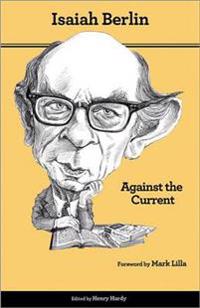
Against the Current – Essays in the History of Ideas – Second Edition
Dubbelkollade priser
Jämför 3 butiker
- Adlibris, 268 kr, frakt enligt butiken. Till butik (öppnas i ny flik)
Slut i lagerFrakt: se butikenDubbelkollad 27 okt. 09:10
268 kr
- Bokus, 293 kr, frakt enligt butiken. Till butik (öppnas i ny flik)
Slut i lagerFrakt: se butikenDubbelkollad 09:51
293 kr
- Akademibokhandeln, 379 kr, frakt enligt butiken. Till butik (öppnas i ny flik)
Slut i lagerFrakt: se butikenDubbelkollad 09:53
379 kr


Priser från butikernas flöden kan ha ändrats: det är priset hos butiken som gäller, så kontrollera det innan du handlar.
Prishistorik
Köp nu eller vänta?
- Lägst
- 260 kr
- Snitt
- 264 kr
- Högst
- 268 kr
| 2026-09-15 | 260 kr · Lägst hos Adlibris |
|---|---|
| 2026-09-24 | 263 kr · Lägst hos Adlibris |
| 2026-10-05 | Ingen butik hade produkten i lager |
| 2026-10-08 | 268 kr · Lägst hos Adlibris |
| 2026-10-22 | Ingen butik hade produkten i lager |
Om produkten
Against the Current – Essays in the History of Ideas – Second Edition
Läs merLäs mindre
In this outstanding collection of essays, Isaiah Berlin, one of the great thinkers of the twentieth century, discusses the importance of dissenters in the history of ideas--among them Machiavelli, Vico, Montesquieu, Herzen, and Sorel. With his unusual powers of imaginative re-creation, Berlin brings to life original minds that swam against the current of their times--and still challenge conventional wisdom. In a new foreword to this corrected edition, which also includes a new appendix of letters in which Berlin discusses and further illuminates some of its topics, noted essayist Mark Lilla argues that Berlin's decision to give up a philosophy fellowship and become a historian of ideas represented not an abandonment of philosophy but a decision to do philosophy by other, perhaps better, means. "His instinct told him," Lilla writes, "that you learn more about an idea as an idea when you know something about its genesis and understand why certain people found it compelling and were