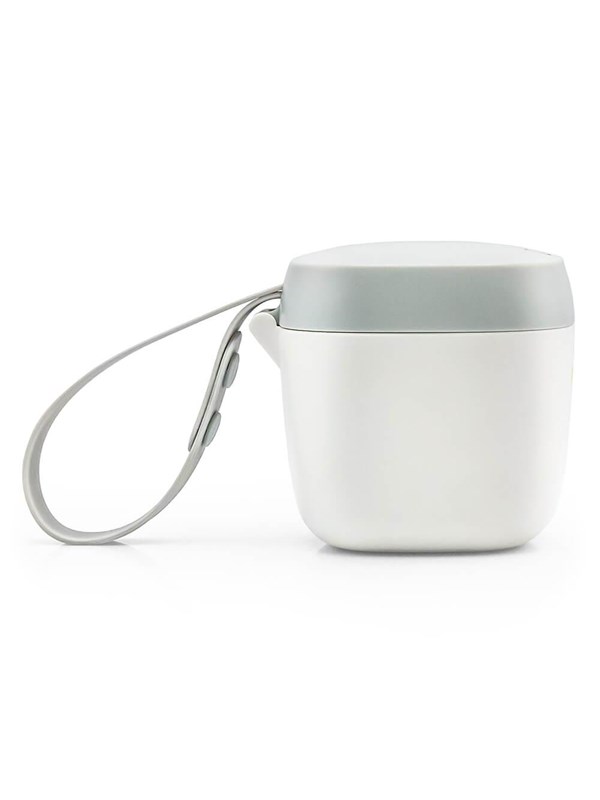
AGU Soother Sterilizer
Dubbelkollat idag
Jämför 1 butik
- Proshop, 345 kr plus 59 kr frakt. Till butik (öppnas i ny flik)
I lagerFrakt 59 krDubbelkollad 07:06
345 kr
Lägst
Priser från butikernas flöden kan ha ändrats: det är priset hos butiken som gäller, så kontrollera det innan du handlar.
Prishistorik
Köp nu eller vänta?
Pris idag
345 kr
- Lägst
- 345 kr
- Snitt
- 347 kr
- Högst
- 351 kr
| 2026-10-06 | 351 kr · Lägst hos Proshop |
|---|---|
| 2026-10-09 | 349 kr · Lägst hos Proshop |
| 2026-10-10 | 347 kr · Lägst hos Proshop |
| 2026-10-11 | 345 kr · Lägst hos Proshop |
| 2026-10-14 | 347 kr · Lägst hos Proshop |
| 2026-10-16 | 345 kr · Lägst hos Proshop |
Om produkten
AGU Soother Sterilizer
Läs merLäs mindre
This cutting-edge soother sterilizer employs UV-C* technology to effectively eliminate up to 99.9% of germs, bacteria, mold, and viruses, ensuring your baby's safety and health as they grow. It is perfect for use when travelling or on the go, when you don't have access to regular sterilization methods. It is designed to fit easily inside any travel or diaper bag and can be attached to strollers or backpacks for easy access. You can choose between two sterilization modes. The first one is done in 60 seconds and gives a rapid disinfection. The second one takes three minutes and provides a more comprehensive sterilization. It is easy to operate. Simply open the lid and place the soother or bottle nipple inside. Once the lid is closed, the process starts with a simple push of the one-button control. If the lid is opened during operation, the sterilizer automatically shuts off for safety measures. The sterilizer is charged with USB and a full charge offers up to 90 sterilization cycles. *Ultraviolet (UV) light has long been hailed for its effectiveness in disinfection across various fields. The UV-C band, in particular, stands out as a formidable germ-killing force. Its short wavelength allows it to penetrate the cell walls of microorganisms, disrupting their DNA and rendering them incapable of reproduction. Viruses, in particular, are highly susceptible to UV-C lights due to their lack of cell walls or membranes.