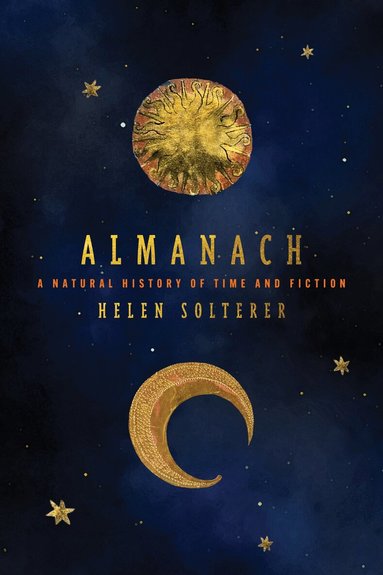
Almanach
1 557 krhos Bokus · exkl. frakt
462 kr skillnad mellan billigaste och dyraste butik i lager
Dubbelkollat idag
Jämför 2 butiker
- Bokus, 1 557 kr, frakt enligt butiken. Till butik (öppnas i ny flik)
I lagerFrakt: se butikenDubbelkollad 19:51
1 557 kr
Lägst
- Akademibokhandeln, 2 019 kr, frakt enligt butiken. Till butik (öppnas i ny flik)
I lagerFrakt: se butikenDubbelkollad 19:53
2 019 kr

Priser från butikernas flöden kan ha ändrats: det är priset hos butiken som gäller, så kontrollera det innan du handlar.
Prishistorik
Köp nu eller vänta?
Pris idag
1 557 kr
- Lägst
- 1 557 kr
- Snitt
- 1 793 kr
- Högst
- 2 029 kr
| 2026-10-15 | 2 029 kr · Lägst hos Akademibokhandeln |
|---|---|
| 2026-10-16 | 1 557 kr · Lägst hos Bokus |
Om produkten
Almanach
Läs merLäs mindre
An age-old, revolutionary design for keeping time by the moon: the almanach outlines a plan for your day-to-day-commemorating notable events in human history while forecasting others in the natural world. In this novel work of criticism, Helen Solterer adopts the form of the almanach to make the case for fiction as experimental work composed in time. Each entry examines a major fictional form taking shape in French around 1400 and its ensuing transformations and interventions in other epochs and cultures: the political vision of writer-activist Edith Thomas with Christine de Pizan, the personal poetry of Langston Hughes and Pauli Murray with Villon, the theater of Samuel Beckett and Bernard-Marie Koltès with those devising the first mystery plays. Solterer takes us from Turkey where almanachs were assembled, across the European continent, to circumpolar Arctic zones where Inuit Thule hunters incised graphic narrative in ivory, still used by Inuit artists today. These "timely fictions," as Solterer dubs many of them, engage generations of creators at an unpredictable tempo; at any given moment, timely fictions exist as the sum of multiple experiments in time. They are a type of compost. Over years, writers and artists mix materials to fertilize the work they make for various different circumstances. By both unearthing and recycling this model, Solterer composes a wholly inventive natural history of fiction.