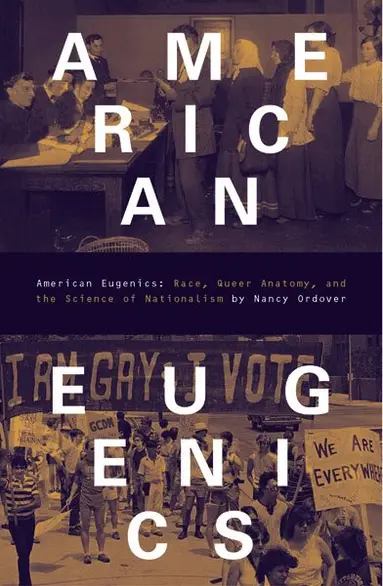
American Eugenics
280 krhos Bokus · exkl. frakt
89 kr skillnad mellan billigaste och dyraste butik i lager
Dubbelkollat idag
Jämför 2 butiker
- Bokus, 280 kr, frakt enligt butiken. Till butik (öppnas i ny flik)
I lagerFrakt: se butikenDubbelkollad 06:51
280 kr
Lägst
- Akademibokhandeln, 369 kr, frakt enligt butiken. Till butik (öppnas i ny flik)
I lagerFrakt: se butikenDubbelkollad 06:53
369 kr

Priser från butikernas flöden kan ha ändrats: det är priset hos butiken som gäller, så kontrollera det innan du handlar.
Prishistorik
Köp nu eller vänta?
Just nu kostar produkten 280 kr — 2 kr över det lägsta vi sett på 1 månad.
Under den tiden har det oftast legat runt 280 kr.
Pris idag
280 kr
- Lägst
- 278 kr
- Snitt
- 281 kr
- Högst
- 283 kr
| 2026-09-15 | 278 kr · Lägst hos Bokus |
|---|---|
| 2026-09-18 | 280 kr · Lägst hos Bokus |
| 2026-09-20 | 279 kr · Lägst hos Bokus |
| 2026-09-27 | 278 kr · Lägst hos Bokus |
| 2026-09-30 | 279 kr · Lägst hos Bokus |
| 2026-10-02 | 281 kr · Lägst hos Bokus |
| 2026-10-04 | 282 kr · Lägst hos Bokus |
| 2026-10-11 | 281 kr · Lägst hos Bokus |
| 2026-10-12 | 280 kr · Lägst hos Bokus |
| 2026-10-16 | 282 kr · Lägst hos Bokus |
| 2026-10-23 | 281 kr · Lägst hos Bokus |
| 2026-10-28 | 283 kr · Lägst hos Bokus |
| 2026-10-29 | 282 kr · Lägst hos Bokus |
| 2026-11-01 | 280 kr · Lägst hos Bokus |
Om produkten
American Eugenics
Läs merLäs mindre
Traces the history of eugenics ideology in the United States and its ongoing presence in contemporary lifeThe Nazis may have given eugenics its negative connotations, but the practice-and the "science" that supports it-is still disturbingly alive in America in anti-immigration initiatives, the quest for a "gay gene," and theories of collective intelligence. Tracing the historical roots and persistence of eugenics in the United States, Nancy Ordover explores the political and cultural climate that has endowed these campaigns with mass appeal and scientific legitimacy. American Eugenics demonstrates how biological theories of race, gender, and sexuality are crucially linked through a concern with regulating the "unfit." These links emerge in Ordover's examination of three separate but ultimately related American eugenics campaigns: early twentieth-century anti-immigration crusades; medical models and interventions imposed on (and sometimes embraced by) lesbians, gays, transgendered people, and bisexuals; and the compulsory sterilization of poor women and women of color. Throughout, her work reveals how constructed notions of race, gender, sexuality, and nation are put to ideological uses and how "faith in science" can undermine progressive social movements, drawing liberals and conservatives alike into eugenics-based discourse and policies.