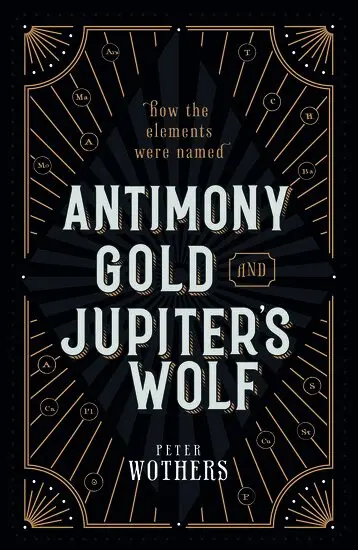
Antimony, Gold, and Jupiter's Wolf
- Vikt 0,52 kg
272 krhos Bokus · exkl. frakt
77 kr skillnad mellan billigaste och dyraste butik i lager
Dubbelkollat idag
Jämför 2 butiker
- Bokus, 272 kr, frakt enligt butiken. Till butik (öppnas i ny flik)
I lagerFrakt: se butikenDubbelkollad 11:51
272 kr
Lägst
- Akademibokhandeln, 349 kr, frakt enligt butiken. Till butik (öppnas i ny flik)
I lagerFrakt: se butikenDubbelkollad 11:53
349 kr

Priser från butikernas flöden kan ha ändrats: det är priset hos butiken som gäller, så kontrollera det innan du handlar.
Prishistorik
Köp nu eller vänta?
Just nu kostar produkten 272 kr — 6 kr över det lägsta vi sett på 1 månad.
Pris idag
272 kr
- Lägst
- 266 kr
- Snitt
- 269 kr
- Högst
- 272 kr
| 2026-09-15 | 266 kr · Lägst hos Bokus |
|---|---|
| 2026-10-11 | 272 kr · Lägst hos Bokus |
Om produkten
Antimony, Gold, and Jupiter's Wolf
Läs merLäs mindre
The iconic Periodic Table of the Elements is now in its most satisfyingly elegant form. This is because all the 'gaps' corresponding to missing elements in the seventh row, or period, have recently been filled and the elements named. But where do these names come from? For some, usually the most recent, the origins are quite obvious, but in others - even well-known elements such as oxygen or nitrogen - the roots are less clear. Here, Peter Wothers explores the fascinating and often surprising stories behind how the chemical elements received their names. Delving back in time to explore the history and gradual development of chemistry, he sifts through medieval manuscripts for clues to the stories surrounding the discovery of the elements, showing how they were first encountered or created, and how they were used in everyday lives. As he reveals, the oldest-known elements were often associated with astronomical bodies, and connections with the heavens influenced the naming of a number of elements. Following this, a number of elements, including hydrogen and oxygen, were named during the great reform of chemistry, set amidst the French Revolution. While some of the origins of the names were controversial (and indeed incorrect - some saying, for instance, that oxygen might be literally taken to mean 'the son of a vinegar merchant'), they have nonetheless influenced language used around the world to this very day. Throughout, Wothers delights in dusting off the original sources, and bringing to light the astonishing, the unusual, and the downright weird origins behind the names of the elements so familiar to us today.
Specifikationer
Fakta
- Vikt
- 0,52 kg
- GTIN
- 09780199652723
Uppgifter från tillverkare och butiker.