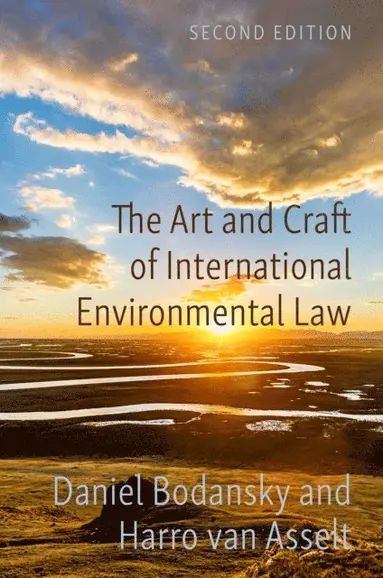
Art and Craft of International Environmental Law
Dubbelkollade priser
Jämför 2 butiker
- Bokus, 371 kr, frakt enligt butiken. Till butik (öppnas i ny flik)
I lagerFrakt: se butikenDubbelkollad 13:51
371 kr
Lägst
- Adlibris, 437 kr, frakt enligt butiken. Till butik (öppnas i ny flik)
Slut i lagerFrakt: se butikenDubbelkollad 27 okt. 09:10
437 kr


Priser från butikernas flöden kan ha ändrats: det är priset hos butiken som gäller, så kontrollera det innan du handlar.
Prishistorik
Köp nu eller vänta?
Just nu kostar produkten 371 kr — 8 kr över det lägsta vi sett på 1 månad.
Pris idag
371 kr
- Lägst
- 363 kr
- Snitt
- 368 kr
- Högst
- 371 kr
| 2026-09-15 | 363 kr · Lägst hos Bokus |
|---|---|
| 2026-10-06 | 371 kr · Lägst hos Bokus |
Om produkten
Art and Craft of International Environmental Law
Läs merLäs mindre
In countless ways we are affected by international environmental norms: some social, others legal; some quite general, others very specific. For example, the norms limiting the refrigerants used in air conditioners have been agreed upon in legal form internationally, and are mandated and enforced by national governments. The sustainable fishery and forestry standards used by Carrefour and Ikea were developed more informally by environmental groups and businesses, and are applied to producers through supply-chain contracts, without any government involvement. The reluctance to eat tuna fish or own elephant ivory reflects more general social norms, disseminated through education and culture.How and why do these norms arise? In what ways do they affect behavior? Do they change what states and individuals actually do and, if so, why? How effective are they in solving international environmental problems? In the second edition of The Art and Craft of International Environmental Law, Daniel Bodansky and Harro van Asselt explore these and other questions.Revisions cover the numerous developments spanning the 13 years since the first edition was published. New chapters address the growing role of environmental NGOs and the increasingly complex architecture of environmental law involving multiple institutions, levels of governance, and actors. Recent research has been incorporated on treaty design and policy implementation and effectiveness, and greater attention has been given to the role of the judiciary in standard-setting, implementation, and enforcement.A sophisticated yet highly readable introduction to how international environmental law works (and sometimes doesn''t work), this book is essential reading for a wide audience.