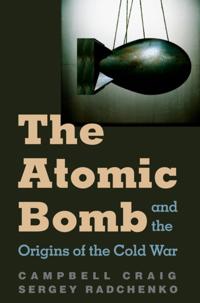
Atomic Bomb and the Origins of the Cold War
Dubbelkollade priser
Jämför 1 butik
- Adlibris, 232 kr plus 35 kr frakt. Till butik (öppnas i ny flik)
Slut i lagerFrakt 35 krDubbelkollad 27 okt. 09:10
232 kr

Priser från butikernas flöden kan ha ändrats: det är priset hos butiken som gäller, så kontrollera det innan du handlar.
Prishistorik
Köp nu eller vänta?
- Lägst
- 156 kr
- Snitt
- 200 kr
- Högst
- 232 kr
| 2026-09-15 | 229 kr · Lägst hos Adlibris |
|---|---|
| 2026-09-17 | 232 kr · Lägst hos Adlibris |
| 2026-09-23 | 156 kr · Lägst hos Adlibris |
| 2026-10-04 | Ingen butik hade produkten i lager |
| 2026-10-08 | 156 kr · Lägst hos Adlibris |
| 2026-10-11 | 232 kr · Lägst hos Adlibris |
| 2026-10-22 | Ingen butik hade produkten i lager |
Om produkten
Atomic Bomb and the Origins of the Cold War
Läs merLäs mindre
A study of nuclear warfare''s key role in triggering the post-World War II confrontation between the US and the USSRAfter a devastating world war, culminating in the obliteration of Hiroshima and Nagasaki, it was clear that the United States and the Soviet Union had to establish a cooperative order if the planet was to escape an atomic World War III. In this provocative study, Campbell Craig and Sergey Radchenko show how the atomic bomb pushed the United States and the Soviet Union not toward cooperation but toward deep bipolar confrontation. Joseph Stalin, sure that the Americans meant to deploy their new weapon against Russia and defeat socialism, would stop at nothing to build his own bomb. Harry Truman, initially willing to consider cooperation, discovered that its pursuit would mean political suicide, especially when news of Soviet atomic spies reached the public. Both superpowers, moreover, discerned a new reality of the atomic age: now, cooperation must be total. The dangers