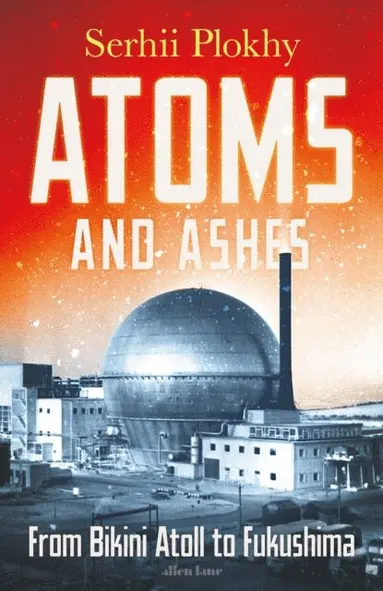
Atoms and Ashes
Dubbelkollat idag
Jämför 1 butik
- Bokus, 125 kr, frakt enligt butiken. Till butik (öppnas i ny flik)
I lagerFrakt: se butikenDubbelkollad 02:51
125 kr
Lägst

Priser från butikernas flöden kan ha ändrats: det är priset hos butiken som gäller, så kontrollera det innan du handlar.
Prishistorik
Köp nu eller vänta?
Just nu kostar produkten 125 kr — 3 kr över det lägsta vi sett på 1 månad.
Pris idag
125 kr
- Lägst
- 122 kr
- Snitt
- 123 kr
- Högst
- 125 kr
| 2026-09-15 | 122 kr · Lägst hos Bokus |
|---|---|
| 2026-10-13 | 125 kr · Lägst hos Bokus |
Om produkten
Atoms and Ashes
Läs merLäs mindre
CHOSEN AS A BOOK OF THE YEAR BY SUNDAY TIMES AND HISTORY TODAY'Absolutely stunning. . . a formidable achievement. A six-part historical thriller that is essential reading for both our politicians and the ordinary citizen' Kai BirdBest-selling historian Serhii Plokhy returns with an illuminating exploration of the atomic age through the history of six nuclear disasters In 2011, a 43-foot-high tsunami crashed into a nuclear power plant in Fukushima, Japan. In the following days, explosions would rip buildings apart, three reactors would go into nuclear meltdown, and the surrounding area would be swamped in radioactive water. It is now considered one of the costliest nuclear disasters ever. But Fukushima was not the first, and it was not the worst. . .In Atoms and Ashes, acclaimed historian Serhii Plokhy tells the tale of the six nuclear disasters that shook the world: Bikini Atoll, Kyshtym, Windscale, Three Mile Island, Chernobyl and Fukushima. Based on wide-ranging research and witness testimony, Plokhy traces the arc of each crisis, exploring in depth the confused decision-making on the ground and the panicked responses of governments to contain the crises and often cover up the scale of the catastrophe.As the world increasingly looks to renewable and alternative sources of energy, Plokhy lucidly argues that the atomic risk must be understood in explicit terms, but also that these calamities reveal a fundamental truth about our relationship with nuclear technology: that the thirst for power and energy has always trumped safety and the cost for future generations.