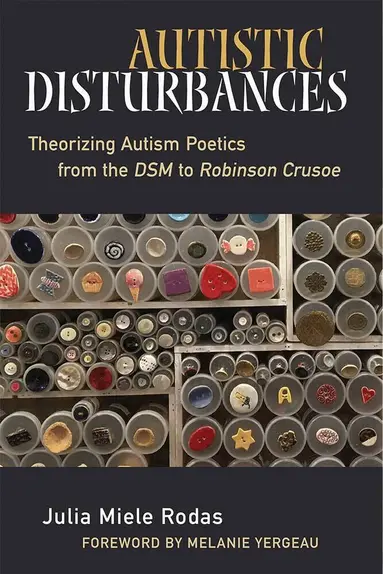
Autistic Disturbances
439 krhos Bokus · exkl. frakt
130 kr skillnad mellan billigaste och dyraste butik i lager
Dubbelkollat idag
Jämför 2 butiker
- Bokus, 439 kr, frakt enligt butiken. Till butik (öppnas i ny flik)
I lagerFrakt: se butikenDubbelkollad 13:51
439 kr
Lägst
- Akademibokhandeln, 569 kr, frakt enligt butiken. Till butik (öppnas i ny flik)
I lagerFrakt: se butikenDubbelkollad 13:53
569 kr

Priser från butikernas flöden kan ha ändrats: det är priset hos butiken som gäller, så kontrollera det innan du handlar.
Prishistorik
Köp nu eller vänta?
Just nu kostar produkten 439 kr — 3 kr över det lägsta vi sett på 1 månad.
Under den tiden har det oftast legat runt 440 kr.
Pris idag
439 kr
- Lägst
- 436 kr
- Snitt
- 439 kr
- Högst
- 443 kr
| 2026-09-15 | 436 kr · Lägst hos Bokus |
|---|---|
| 2026-09-18 | 439 kr · Lägst hos Bokus |
| 2026-09-19 | 438 kr · Lägst hos Bokus |
| 2026-09-20 | 437 kr · Lägst hos Bokus |
| 2026-09-23 | 438 kr · Lägst hos Bokus |
| 2026-09-25 | 437 kr · Lägst hos Bokus |
| 2026-09-27 | 436 kr · Lägst hos Bokus |
| 2026-09-30 | 437 kr · Lägst hos Bokus |
| 2026-10-04 | 442 kr · Lägst hos Bokus |
| 2026-10-09 | 441 kr · Lägst hos Bokus |
| 2026-10-11 | 440 kr · Lägst hos Bokus |
| 2026-10-13 | 439 kr · Lägst hos Bokus |
| 2026-10-16 | 441 kr · Lägst hos Bokus |
| 2026-10-28 | 443 kr · Lägst hos Bokus |
| 2026-11-01 | 439 kr · Lägst hos Bokus |
Om produkten
Autistic Disturbances
Läs merLäs mindre
While research on autism has sometimes focused on special talents or abilities, autism is typically characterized as impoverished or defective when it comes to language. Autistic Disturbances reveals the ways interpreters have failed to register the real creative valence of autistic language and offers a theoretical framework for understanding the distinctive aesthetics of autistic rhetoric and semiotics. Reinterpreting characteristic autistic verbal practices such as repetition in the context of a more widely respected literary canon, Julia Miele Rodas argues that autistic language is actually an essential part of mainstream literary aesthetics, visible in poetry by Walt Whitman and Gertrude Stein, in novels by Charlotte Brontë and Daniel Defoe, in life writing by Andy Warhol, and even in writing by figures from popular culture. Autistic Disturbances pursues these resonances and explores the tensions of language and culture that lead to the classification of some verbal expression as disordered while other, similar expression enjoys prized status as literature. It identifies the most characteristic patterns of autistic expression-repetition, monologue, ejaculation, verbal ordering or list-making, and neologism-and adopts new language to describe and reimagine these categories in aesthetically productive terms. In so doing, the book seeks to redress the place of verbal autistic language, to argue for the value and complexity of autistic ways of speaking, and to invite recognition of an obscured tradition of literary autism at the very center of Anglo-American text culture.