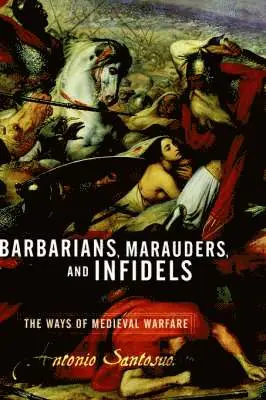
Barbarians, Marauders, And Infidels
448 krhos Bokus · exkl. frakt
131 kr skillnad mellan billigaste och dyraste butik i lager
Dubbelkollade priser
Jämför 3 butiker
- Bokus, 448 kr, frakt enligt butiken. Till butik (öppnas i ny flik)
I lagerFrakt: se butikenDubbelkollad 18:51
448 kr
Lägst
- Akademibokhandeln, 579 kr, frakt enligt butiken. Till butik (öppnas i ny flik)
I lagerFrakt: se butikenDubbelkollad 19:19
579 kr
- Adlibris, 491 kr, frakt enligt butiken. Till butik (öppnas i ny flik)
Slut i lagerFrakt: se butikenDubbelkollad 27 okt. 09:10
491 kr


Priser från butikernas flöden kan ha ändrats: det är priset hos butiken som gäller, så kontrollera det innan du handlar.
Prishistorik
Köp nu eller vänta?
Just nu kostar produkten 448 kr — 10 kr över det lägsta vi sett på 1 månad.
Under den tiden har det oftast legat runt 450–490 kr.
Pris idag
448 kr
- Lägst
- 438 kr
- Snitt
- 470 kr
- Högst
- 491 kr
| 2026-09-15 | 476 kr · Lägst hos Bokus |
|---|---|
| 2026-09-23 | 476 kr · Lägst hos Adlibris |
| 2026-09-24 | 481 kr · Lägst hos Bokus |
| 2026-09-27 | 438 kr · Lägst hos Bokus |
| 2026-09-30 | 481 kr · Lägst hos Bokus |
| 2026-10-05 | 486 kr · Lägst hos Bokus |
| 2026-10-09 | 447 kr · Lägst hos Bokus |
| 2026-10-11 | 491 kr · Lägst hos Bokus |
| 2026-10-15 | 447 kr · Lägst hos Bokus |
| 2026-10-20 | 491 kr · Lägst hos Bokus |
| 2026-10-24 | 447 kr · Lägst hos Bokus |
| 2026-10-28 | 449 kr · Lägst hos Bokus |
| 2026-10-29 | 448 kr · Lägst hos Bokus |
Om produkten
Barbarians, Marauders, And Infidels
Läs merLäs mindre
Barbarians, Marauders, and Infidels examines the motives and terrors of war during the Middle Ages, the rise and fall of ethnic and religious groups, and the actions of good and evil military leaders during this violent and colourful period. In this sweeping chronicle, historical figures and major campaigns such as Charlemagne, the Magyars, and the Crusades are presented not as icons but as a living part of their times, with all their achievements and human failures. Santosuosso asserts that war, for most of the Middle Ages, was carried out for God, personal gain, and honor. Both Christians and Muslims often explained their acts of violence in war as the will of God. Besides the religious motivation, soldiers, if upper class, believed that acts of bravery were a necessary aspect of gaining honor in society. Finally, war constituted a way to make material gains in a period of chronic underemployment and low prosperity. Particular emphasis is given to massive transitions from one period to the next in the medieval era. The author explains how these changes reflected an environment where charismatic leaders, the Church, and the aristocracy played leading roles as "managers" of the art and practice of war and normally as main actors on the battlefield.