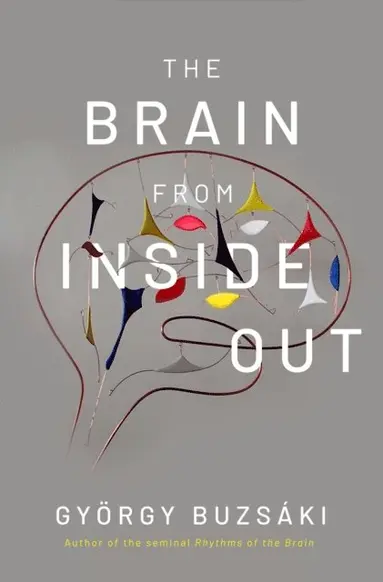
Brain from Inside Out
Dubbelkollat idag
Jämför 1 butik
- Bokus, 330 kr, frakt enligt butiken. Till butik (öppnas i ny flik)
I lagerFrakt: se butikenDubbelkollad 01:51
330 kr
Lägst

Priser från butikernas flöden kan ha ändrats: det är priset hos butiken som gäller, så kontrollera det innan du handlar.
Prishistorik
Köp nu eller vänta?
Just nu kostar produkten 330 kr — 43 kr över det lägsta vi sett på 1 månad.
Under den tiden har det oftast legat runt 290–330 kr.
Pris idag
330 kr
- Lägst
- 287 kr
- Snitt
- 317 kr
- Högst
- 330 kr
| 2026-09-15 | 323 kr · Lägst hos Bokus |
|---|---|
| 2026-09-29 | 287 kr · Lägst hos Bokus |
| 2026-10-11 | 330 kr · Lägst hos Bokus |
Om produkten
Is there a right way to study how the brain works?
Läs merLäs mindre
Following the empiricist''s tradition, the most common approach involves the study of neural reactions to stimuli presented by an experimenter. This ''outside-in'' method fueled a generation of brain research and now must confront hidden assumptions about causation and concepts that may not hold neatly for systems that act and react. György Buzsáki''s The Brain from Inside Out examines why the outside-in framework for understanding brain function has become stagnant and points to new directions for understanding neural function. Building upon the success of 2011''s Rhythms of the Brain, Professor Buzsáki presents the brain as a foretelling device that interacts with its environment through action and the examination of action''s consequence. Consider that our brains are initially filled with nonsense patterns, all of which are gibberish until grounded by action-based interactions. By matching these nonsense "words" to the outcomes of action, they acquire meaning. Once its circuits are "calibrated" by action and experience, the brain can disengage from its sensors and actuators, and examine "what happens if" scenarios by peeking into its own computation, a process that we refer to as cognition. The Brain from Inside Out explains why our brain is not an information-absorbing coding device, as it is often portrayed, but a venture-seeking explorer constantly controlling the body to test hypotheses. Our brain does not process information: it creates it.