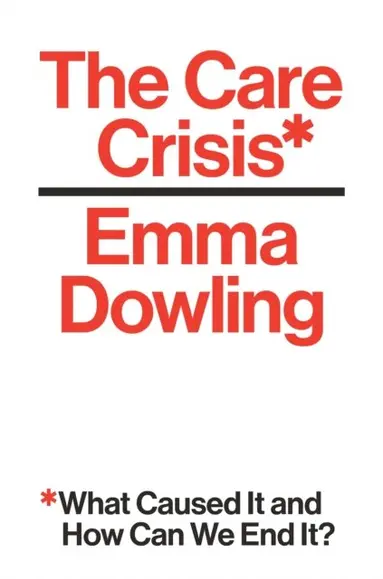
Care Crisis
Dubbelkollat idag
Jämför 1 butik
- Bokus, 100 kr, frakt enligt butiken. Till butik (öppnas i ny flik)
I lagerFrakt: se butikenDubbelkollad 04:51
100 kr
Lägst

Priser från butikernas flöden kan ha ändrats: det är priset hos butiken som gäller, så kontrollera det innan du handlar.
Prishistorik
Köp nu eller vänta?
Just nu kostar produkten 100 kr — 2 kr över det lägsta vi sett på 1 månad.
Under den tiden har det oftast legat runt 100–110 kr.
Pris idag
100 kr
- Lägst
- 98 kr
- Snitt
- 105 kr
- Högst
- 110 kr
| 2026-09-15 | 109 kr · Lägst hos Bokus |
|---|---|
| 2026-09-19 | 98 kr · Lägst hos Bokus |
| 2026-09-22 | 110 kr · Lägst hos Bokus |
| 2026-09-27 | 98 kr · Lägst hos Bokus |
| 2026-09-29 | 110 kr · Lägst hos Bokus |
| 2026-10-08 | 100 kr · Lägst hos Bokus |
| 2026-10-13 | 110 kr · Lägst hos Bokus |
| 2026-10-17 | 100 kr · Lägst hos Bokus |
| 2026-10-22 | 110 kr · Lägst hos Bokus |
| 2026-10-26 | 100 kr · Lägst hos Bokus |
Om produkten
Care Crisis
Läs merLäs mindre
Every one of us will need care at some point in life: social care, healthcare, childcare, eldercare. In the shadow of COVID-19, care has become the most urgent topic of our times. But our care systems are in crisis. Concern for the most vulnerable has been overtaken by an obsession with profits and productivity. How did we end up here? In an era of economic turmoil, lower birth rates and increased life expectancy mean a larger proportion of the population than ever before is of retirement age. As a result, more people need care, and their numbers are rising. Yet, despite the demand, public services continue to be cut and sold off. Those most in need are left to fend for themselves. In this groundbreaking book, Emma Dowling charts the multifaceted nature of the care crisis. Telling the stories of those on the frontlines through conversations with paid and unpaid carers, doctors, social workers, parents, and eldercare workers, she exposes the devastating impact of financialisation and austerity. The Care Crisis reveals a system that places profits before people and shows that privatisation has been key to producing a state of disarray.Dowling maps the new economy of abandonment, raising the unavoidable question: how do we end the crisis?