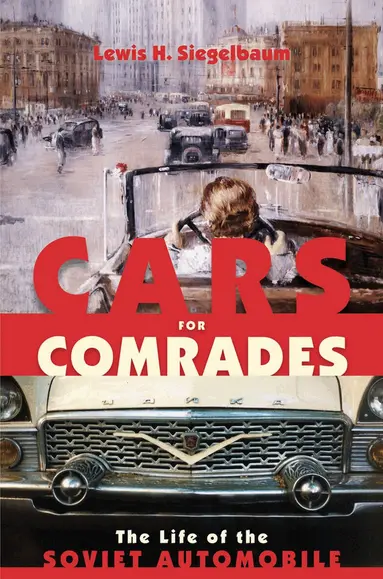
Cars for Comrades
- Vikt 0,46 kg
297 krhos Bokus · exkl. frakt
92 kr skillnad mellan billigaste och dyraste butik i lager
Dubbelkollade priser
Jämför 3 butiker
- Bokus, 297 kr, frakt enligt butiken. Till butik (öppnas i ny flik)
I lagerFrakt: se butikenDubbelkollad 10:51
297 kr
Lägst
- Akademibokhandeln, 389 kr, frakt enligt butiken. Till butik (öppnas i ny flik)
I lagerFrakt: se butikenDubbelkollad 11:18
389 kr
- Adlibris, 421 kr, frakt enligt butiken. Till butik (öppnas i ny flik)
Slut i lagerFrakt: se butikenDubbelkollad 27 okt. 09:10
421 kr


Priser från butikernas flöden kan ha ändrats: det är priset hos butiken som gäller, så kontrollera det innan du handlar.
Prishistorik
Köp nu eller vänta?
Just nu kostar produkten 297 kr — 33 kr över det lägsta vi sett på 1 månad.
Under den tiden har det oftast legat runt 260–300 kr.
Pris idag
297 kr
- Lägst
- 264 kr
- Snitt
- 286 kr
- Högst
- 389 kr
| 2026-09-15 | 264 kr · Lägst hos Adlibris |
|---|---|
| 2026-10-05 | Ingen butik hade produkten i lager |
| 2026-10-07 | 389 kr · Lägst hos Akademibokhandeln |
| 2026-10-08 | 299 kr · Lägst hos Bokus |
| 2026-10-11 | 298 kr · Lägst hos Bokus |
| 2026-10-13 | 297 kr · Lägst hos Bokus |
| 2026-10-16 | 299 kr · Lägst hos Bokus |
| 2026-10-22 | 297 kr · Lägst hos Bokus |
| 2026-10-24 | 299 kr · Lägst hos Bokus |
| 2026-10-28 | 300 kr · Lägst hos Bokus |
| 2026-11-01 | 297 kr · Lägst hos Bokus |
Om produkten
The automobile and Soviet communism made an odd couple
Läs merLäs mindre
The quintessential symbol of American economic might and consumerism never achieved iconic status as an engine of Communist progress, in part because it posed an awkward challenge to some basic assumptions of Soviet ideology and practice. In this rich and often witty book, Lewis H. Siegelbaum recounts the life of the Soviet automobile and in the process gives us a fresh perspective on the history and fate of the USSR itself.Based on sources ranging from official state archives to cartoons, car-enthusiast magazines, and popular films, Cars for Comrades takes us from the construction of the huge "Soviet Detroits," emblems of the utopian phase of Soviet planning, to present-day Togliatti, where the fate of Russia's last auto plant hangs in the balance. The large role played by American businessmen and engineers in the checkered history of Soviet automobile manufacture is one of the book's surprises, and the author points up the ironic parallels between the Soviet story and the decline of the American Detroit. In the interwar years, automobile clubs, car magazines, and the popularity of rally races were signs of a nascent Soviet car culture, its growth slowed by the policies of the Stalinist state and by Russia's intractable "roadlessness." In the postwar years cars appeared with greater frequency in songs, movies, novels, and in propaganda that promised to do better than car-crazy America.Ultimately, Siegelbaum shows, the automobile epitomized and exacerbated the contradictions between what Soviet communism encouraged and what it provided. To need a car was a mark of support for industrial goals; to want a car for its own sake was something else entirely. Because Soviet cars were both hard to get and chronically unreliable, and such items as gasoline and spare parts so scarce, owning and maintaining them enmeshed citizens in networks of private, semi-illegal, and ideologically heterodox practices that the state was helpless to combat. Deeply researched and engagingly told, this masterful and entertaining biography of the Soviet automobile provides a new perspective on one of the twentieth century's most iconic-and important-technologies and a novel approach to understanding the history of the Soviet Union itself.
Specifikationer
Fakta
- Vikt
- 0,46 kg
- GTIN
- 09780801477218
Uppgifter från tillverkare och butiker.