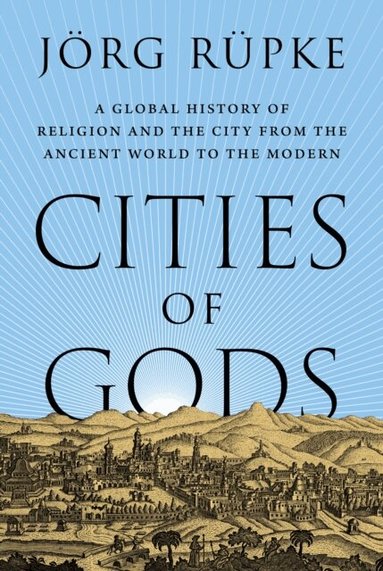
Cities of Gods
Dubbelkollat idag
Jämför 1 butik
- Bokus, 500 kr, frakt enligt butiken. Till butik (öppnas i ny flik)
I lagerFrakt: se butikenDubbelkollad 18:51
500 kr
Lägst

Priser från butikernas flöden kan ha ändrats: det är priset hos butiken som gäller, så kontrollera det innan du handlar.
Prishistorik
Köp nu eller vänta?
Pris idag
500 kr
- Lägst
- 484 kr
- Snitt
- 496 kr
- Högst
- 500 kr
| 2026-10-09 | 484 kr · Lägst hos Bokus |
|---|---|
| 2026-10-11 | 500 kr · Lägst hos Bokus |
Om produkten
Cities of Gods
Läs merLäs mindre
How cities and religions have shaped each other through historyIn Cities of Gods, Jorg Rupke offers an entirely new vision of the history of religionone in which religion has shaped cities and cities have shaped religion. Rupke shows how religious actions and ideas have produced cities since urbanization began some 6,000 years agoand how cities have, in turn, changed religious practices. Cities have created new mass rituals that instill the idea of an encompassing community; priestly hierarchies, religious organizations, and globalized religious traditions follow. Urban religion, Rupke argues, helps people in cities build a world and an identity that make living in a risky and powerful space more bearable.Rupke explores early processes of urbanization in Mesopotamia and Asia, showing how people's willingness to live differently creates urban space. In examining the dynamic relationship between urban and religious change, Rupke considers the differences and commonalties of cities including Uruk, Jerusalem, Vanarasi, Chang'an, Cairo, Lhasa, and Kyoto. The construction of monuments, the embellishment and appropriation of beliefs and rituals, the inclusion of ancestors and deities in social life: each offers a different lens for a history of the city that is also a history of religion. Much of what we consider characteristic of religion and religious practices comes not from the lone cry of a prophet or the prayer of a saint but from an urban religion built from the solidarity of people living in cities.