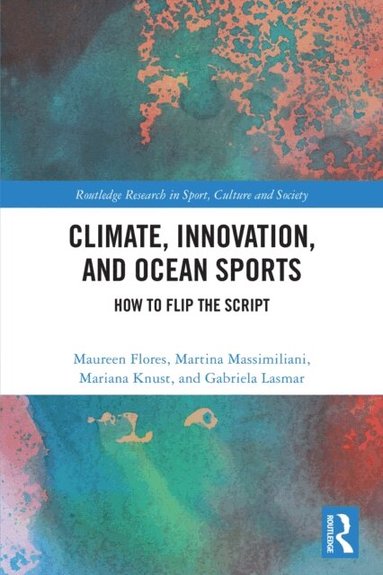
Climate, Innovation, and Ocean Sports
Dubbelkollat idag
Jämför 1 butik
- Bokus, 831 kr, frakt enligt butiken. Till butik (öppnas i ny flik)
I lagerFrakt: se butikenDubbelkollad 18:51
831 kr
Lägst

Priser från butikernas flöden kan ha ändrats: det är priset hos butiken som gäller, så kontrollera det innan du handlar.
Prishistorik
Köp nu eller vänta?
Just nu kostar produkten 831 kr — 18 kr över det lägsta vi sett på 2 veckor.
Pris idag
831 kr
- Lägst
- 813 kr
- Snitt
- 827 kr
- Högst
- 831 kr
| 2026-10-02 | 813 kr · Lägst hos Bokus |
|---|---|
| 2026-10-06 | 831 kr · Lägst hos Bokus |
Om produkten
Climate, Innovation, and Ocean Sports
Läs merLäs mindre
This book reveals how ocean sports serve as critical windows into our planet's changing climate systems, offering unique insights into adaptation strategies for climate events. The book explores the connections between physical oceanography and four major ocean sports, surfing, sailing, open-water swimming, and beach sprint rowing, as they face disruption from rising sea levels, coastal erosion, and shifting oceanic patterns.Climate, Innovation, and Ocean Sports: How to Flip the Script combines rigorous scientific analysis with policy frameworks and real-world case studies to demonstrate how these sports constitute sophisticated climate knowledge systems rather than mere recreational activities. In doing so, the book sheds light on how climate stressors are altering the fundamental dynamics of these sports, affecting everything from athlete performance and event planning to industry operations and coastal economies. Through a detailed exploration of parametric insurance, thermally adaptive gear, digital forecasting technologies, and simulation platforms, the book showcases emerging innovations that could increase resilience in competition venues. As such, the book effectively integrates ocean sports into broader frameworks like the Sustainable Development Goals, Blue Economy policies, and the EU's Corporate Sustainability Reporting Directive, highlighting critical governance gaps where these activities remain overlooked despite their economic and cultural significance. Through both primary and secondary data, the book constructs a new paradigm that positions ocean sports as essential stakeholders in coastal resilience and marine governance.This book will be useful for all ocean sports federations, helping them in their planning activities, also for athletes, students, researchers, academics, and those interested in sustainable development, climate issues, marine science, environmental governance, and sport management studies more broadly.