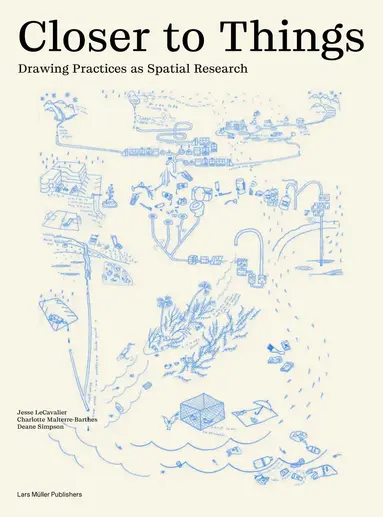
Closer to Things
Dubbelkollat idag
Jämför 2 butiker
- Bokus, 454 kr, frakt enligt butiken. Till butik (öppnas i ny flik)
Slut i lagerFrakt: se butikenDubbelkollad 05:51
454 kr
- Akademibokhandeln, 589 kr, frakt enligt butiken. Till butik (öppnas i ny flik)
Slut i lagerFrakt: se butikenDubbelkollad 05:53
589 kr

Priser från butikernas flöden kan ha ändrats: det är priset hos butiken som gäller, så kontrollera det innan du handlar.
Prishistorik
Köp nu eller vänta?
- Lägst
- 452 kr
- Snitt
- 464 kr
- Högst
- 599 kr
| 2026-09-15 | 452 kr · Lägst hos Bokus |
|---|---|
| 2026-09-19 | 454 kr · Lägst hos Bokus |
| 2026-09-20 | 453 kr · Lägst hos Bokus |
| 2026-09-23 | 454 kr · Lägst hos Bokus |
| 2026-09-24 | 453 kr · Lägst hos Bokus |
| 2026-09-25 | 452 kr · Lägst hos Bokus |
| 2026-09-30 | 453 kr · Lägst hos Bokus |
| 2026-10-02 | 456 kr · Lägst hos Bokus |
| 2026-10-04 | 458 kr · Lägst hos Bokus |
| 2026-10-12 | 455 kr · Lägst hos Bokus |
| 2026-10-16 | 458 kr · Lägst hos Bokus |
| 2026-10-17 | 456 kr · Lägst hos Bokus |
| 2026-10-22 | 455 kr · Lägst hos Bokus |
| 2026-10-24 | 457 kr · Lägst hos Bokus |
| 2026-10-27 | 458 kr · Lägst hos Bokus |
| 2026-10-28 | 599 kr · Lägst hos Akademibokhandeln |
| 2026-10-31 | Ingen butik hade produkten i lager |
Om produkten
Closer to Things
Läs merLäs mindre
Closer to Things: Drawing Practices as Spatial Research examines drawing as a critical research methodology in architecture and the spatial disciplines. Moving beyond drawing's conventional role as a prescriptive design tool, the publication addresses how drawing can be deployed as an analytical instrument to investigate, or get "closer to," urgent matters of concern in the existing built environment. Through this lens, drawing becomes a potent tool to reveal and communicate complex and often obscured spatial conditions of social inequality, economic asymmetries, environmental degradation or climatic crisis. This publication comprises an extended text by the authors interrogating different forms of research agency performed through drawing; a curated archive of relevant historical and contemporary drawings paired with theoretical reflections; and a series of new interviews and conversations on drawing's research agency with practitioners and researchers such as Momoyo Kaijima, Eyal Weizman, Fei Fei Zhou, Laura Kurgan, Huda Tayob and Denise Scott-Brown, amongst others. Relevant reading for researchers, practitioners and students alike, Closer to Things frames drawing not just as a creative act, but as a powerful tool of critical spatial inquiry.