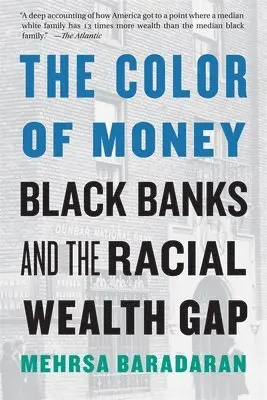
Color of Money
- Vikt 0,34 kg
191 krhos Bokus · exkl. frakt
58 kr skillnad mellan billigaste och dyraste butik i lager
Dubbelkollat idag
Jämför 2 butiker
- Bokus, 191 kr, frakt enligt butiken. Till butik (öppnas i ny flik)
I lagerFrakt: se butikenDubbelkollad 08:51
191 kr
Lägst
- Akademibokhandeln, 249 kr, frakt enligt butiken. Till butik (öppnas i ny flik)
I lagerFrakt: se butikenDubbelkollad 08:53
249 kr

Priser från butikernas flöden kan ha ändrats: det är priset hos butiken som gäller, så kontrollera det innan du handlar.
Prishistorik
Köp nu eller vänta?
Just nu kostar produkten 191 kr — 4 kr över det lägsta vi sett på 1 månad.
Under den tiden har det oftast legat runt 190 kr.
Pris idag
191 kr
- Lägst
- 187 kr
- Snitt
- 191 kr
- Högst
- 194 kr
| 2026-09-15 | 187 kr · Lägst hos Bokus |
|---|---|
| 2026-09-17 | 188 kr · Lägst hos Bokus |
| 2026-09-20 | 189 kr · Lägst hos Bokus |
| 2026-09-27 | 190 kr · Lägst hos Bokus |
| 2026-09-28 | 191 kr · Lägst hos Bokus |
| 2026-10-02 | 192 kr · Lägst hos Bokus |
| 2026-10-07 | 194 kr · Lägst hos Bokus |
| 2026-10-09 | 192 kr · Lägst hos Bokus |
| 2026-10-11 | 193 kr · Lägst hos Bokus |
| 2026-10-13 | 192 kr · Lägst hos Bokus |
| 2026-10-16 | 193 kr · Lägst hos Bokus |
| 2026-10-17 | 192 kr · Lägst hos Bokus |
| 2026-10-20 | 191 kr · Lägst hos Bokus |
| 2026-10-28 | 192 kr · Lägst hos Bokus |
| 2026-11-01 | 191 kr · Lägst hos Bokus |
Om produkten
"Read this book
Läs merLäs mindre
It explains so much about the moment...Beautiful, heartbreaking work." -Ta-Nehisi Coates"A deep accounting of how America got to a point where a median white family has 13 times more wealth than the median black family."-The Atlantic"Extraordinary...Baradaran focuses on a part of the American story that's often ignored: the way African Americans were locked out of the financial engines that create wealth in America."-Ezra KleinWhen the Emancipation Proclamation was signed in 1863, the black community owned less than 1 percent of the total wealth in America. More than 150 years later, that number has barely budged. The Color of Money seeks to explain the stubborn persistence of this racial wealth gap by focusing on the generators of wealth in the black community: black banks.With the civil rights movement in full swing, President Nixon promoted "black capitalism," a plan to support black banks and minority-owned businesses. But the catch-22 of black banking is that the very institutions needed to help communities escape the deep poverty caused by discrimination and segregation inevitably became victims of that same poverty. In this timely and eye-opening account, Baradaran challenges the long-standing belief that black communities could ever really hope to accumulate wealth in a segregated economy."Black capitalism has not improved the economic lives of black people, and Baradaran deftly explains the reasons why."-Los Angeles Review of Books"A must read for anyone interested in closing America's racial wealth gap."-Black Perspectives
Specifikationer
Fakta
- Vikt
- 0,34 kg
- GTIN
- 09780674237476
Uppgifter från tillverkare och butiker.