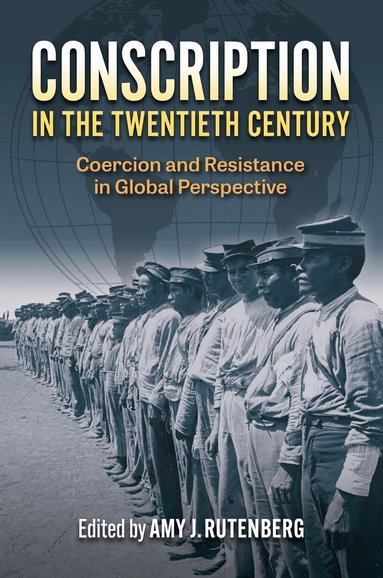
Conscription in the Twentieth Century
1 030 krhos Bokus · exkl. frakt
309 kr skillnad mellan billigaste och dyraste butik i lager
Dubbelkollat idag
Jämför 2 butiker
- Bokus, 1 030 kr, frakt enligt butiken. Till butik (öppnas i ny flik)
I lagerFrakt: se butikenDubbelkollad 04:51
1 030 kr
Lägst
- Akademibokhandeln, 1 339 kr, frakt enligt butiken. Till butik (öppnas i ny flik)
I lagerFrakt: se butikenDubbelkollad 04:53
1 339 kr

Priser från butikernas flöden kan ha ändrats: det är priset hos butiken som gäller, så kontrollera det innan du handlar.
Prishistorik
Köp nu eller vänta?
Pris idag
1 030 kr
- Lägst
- 1 030 kr
- Snitt
- 1 064 kr
- Högst
- 1 339 kr
| 2026-10-10 | 1 339 kr · Lägst hos Akademibokhandeln |
|---|---|
| 2026-10-11 | 1 030 kr · Lägst hos Bokus |
Om produkten
Conscription in the Twentieth Century
Läs merLäs mindre
This collection reveals conscription as one of the most powerful-and coercive-tools of the modern state, a litmus test for the relationship between governments, militaries, and the people they claim to defend.Americans often view their military through the lens of confident exceptionalism-a belief that the challenges faced by other nations could never take root in the United States. Our history, we tell ourselves, proves it. Yet a closer look at how Americans have responded to military service reveals a far more complicated story: moments of internal rebellion, mass resistance to conscription, ethically fraught wars, and recurring gaps between the military and the society it serves. These realities call not for complacency, but for humility-and for serious engagement with the experiences of others.Conscription in the Twentieth Century confronts one of the most fundamental questions in civil-military relations: who serves. While often framed as a uniquely American debate, this question has shaped national identity, citizenship, social cohesion, and political legitimacy across the world and in different types of government. Drawing on a remarkable range of international case studies, this volume shows how conscription has unified societies and fractured them, strengthened democratic legitimacy and exposed its absence.At a moment when democracies confront politicized militaries, recruiting crises, declining public trust, and widening civil-military divides, the lessons of this book are both timely and urgent. Essential reading for students of military history and civil-military relations, Conscription in the Twentieth Century will also speak directly to policymakers, military professionals, and anyone grappling with the future of democratic defense.