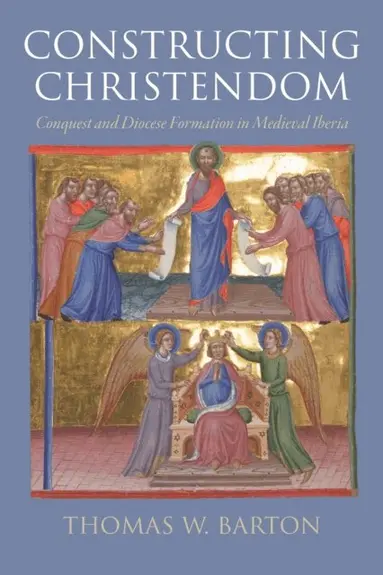
Constructing Christendom
Dubbelkollat idag
Jämför 1 butik
- Bokus, 742 kr, frakt enligt butiken. Till butik (öppnas i ny flik)
I lagerFrakt: se butikenDubbelkollad 01:51
742 kr
Lägst

Priser från butikernas flöden kan ha ändrats: det är priset hos butiken som gäller, så kontrollera det innan du handlar.
Prishistorik
Köp nu eller vänta?
Just nu kostar produkten 742 kr — 16 kr över det lägsta vi sett på 1 månad.
Pris idag
742 kr
- Lägst
- 726 kr
- Snitt
- 733 kr
- Högst
- 742 kr
| 2026-09-15 | 726 kr · Lägst hos Bokus |
|---|---|
| 2026-10-12 | 742 kr · Lägst hos Bokus |
Om produkten
Constructing Christendom
Läs merLäs mindre
An examination of how church leaders partnered with lay rulers to integrate lands conquered from the Muslims in the Iberian Peninsula from the ninth through the fourteenth centuriesIn Constructing Christendom, Thomas W. Barton examines how church leaders partnered with lay rulers to integrate lands conquered from the Muslims in the Iberian Peninsula from the ninth through the fourteenth centuries. In tracing the intricate developmental histories of a cluster of competitive neighboring bishoprics, Barton reveals how rival factions fought over new territory by asserting that it belonged to their foundations according to ancient precedent. Wielding self-interested, manipulated recollections of the organization of the Visigothic church that had predated the eighth-century Muslim conquest did more than further these local territorial battles; it helped promote a shared revisionist Christian historical vision that delegitimized non-Christian rule and emphasized the elemental, divinely ordained centrality of papal authority.Based on over a decade of research and drawing on documentation from numerous underutilized local archives, Constructing Christendom presents the unwritten histories of these foundations to demonstrate how such local efforts to expand Latin Christendom's frontiers and establish or enlarge dioceses came to be associated with the reordering of the ecclesiastical hierarchy and the solidification of a cohesive European Christian identity. Despite the persistence of some unique features deriving from the formational histories of these frontier bishoprics, the overarching trend, Barton finds, was toward gradual homogenization, as dioceses on Christendom's periphery and established ones situated closer to its core increasingly came to resemble one another in terms of their administrative and cultural attributes and relationships to papacy-centric governance.