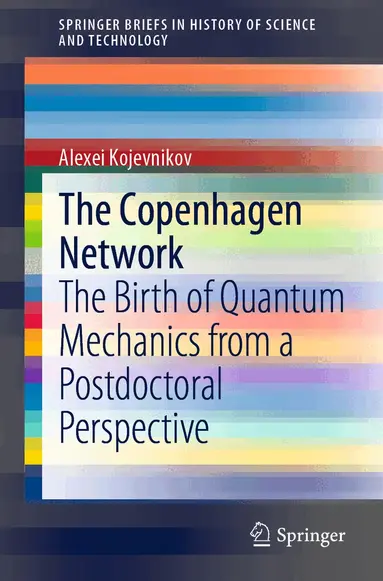
Copenhagen Network
- Vikt 0,2 kg
Bra pris nuLägsta priset på 1 månad
599 kr602 kr−0% senaste veckanhos Bokus · exkl. frakt
Jämfört med det lägsta pris vi sett de 30 dagarna före sänkningen.
180 kr skillnad mellan billigaste och dyraste butik i lager
Dubbelkollat idag
Jämför 2 butiker
- Bokus, 599 kr, frakt enligt butiken. Till butik (öppnas i ny flik)
I lagerFrakt: se butikenDubbelkollad 15:51
599 kr
Lägst
- Akademibokhandeln, 779 kr, frakt enligt butiken. Till butik (öppnas i ny flik)
I lagerFrakt: se butikenDubbelkollad 15:53
779 kr

Priser från butikernas flöden kan ha ändrats: det är priset hos butiken som gäller, så kontrollera det innan du handlar.
Prishistorik
Köp nu eller vänta?
Just nu kostar produkten 599 kr — det lägsta vi sett på 1 månad.
Under den tiden har det oftast legat runt 610 kr.
Pris idag
599 kr
- Lägst
- 599 kr
- Snitt
- 609 kr
- Högst
- 618 kr
| 2026-09-15 | 618 kr · Lägst hos Bokus |
|---|---|
| 2026-09-17 | 611 kr · Lägst hos Bokus |
| 2026-09-20 | 610 kr · Lägst hos Bokus |
| 2026-09-23 | 612 kr · Lägst hos Bokus |
| 2026-09-25 | 609 kr · Lägst hos Bokus |
| 2026-09-27 | 610 kr · Lägst hos Bokus |
| 2026-09-30 | 611 kr · Lägst hos Bokus |
| 2026-10-02 | 614 kr · Lägst hos Bokus |
| 2026-10-07 | 612 kr · Lägst hos Bokus |
| 2026-10-09 | 609 kr · Lägst hos Bokus |
| 2026-10-12 | 607 kr · Lägst hos Bokus |
| 2026-10-13 | 605 kr · Lägst hos Bokus |
| 2026-10-16 | 607 kr · Lägst hos Bokus |
| 2026-10-17 | 605 kr · Lägst hos Bokus |
| 2026-10-19 | 606 kr · Lägst hos Bokus |
| 2026-10-20 | 604 kr · Lägst hos Bokus |
| 2026-10-22 | 602 kr · Lägst hos Bokus |
| 2026-10-24 | 605 kr · Lägst hos Bokus |
| 2026-10-30 | 607 kr · Lägst hos Bokus |
| 2026-11-01 | 599 kr · Lägst hos Bokus |
Om produkten
Copenhagen Network
Läs merLäs mindre
This book is a historical analysis of the quantum mechanical revolution and the emergence of a new discipline from the perspective, not of a professor, but of a recent or actual Ph.D. student just embarking on an uncertain academic career in economically hard times. Quantum mechanics exploded on to the intellectual scene between 1925 and 1927, with more than 200 publications across the world, the majority of them authored by young scientists under the age of 30, graduate students or postdoctoral fellows. The resulting theory was a collective product that no single authority could claim, but it had a major geographical nod - the Copenhagen Institute of Theoretical Physics - where most of the informal, pre-published exchange of ideas occurred and where every participant of the new community aspired to visit. A rare combination of circumstances and resources - political, diplomatic, financial, and intellectual - allowed Niels Bohr to establish this "Mecca" of quantum theory outside of traditional and more powerful centres of science. Transitory international postdoctoral fellows, rather than established professors, developed a culture of research that became the source of major innovations in the field. Temporary assistantships, postdoctoral positions, and their equivalents were the chief mode of existence for young academics during the period of economic crisis and post-WWI international tensions. Insecure career trajectories and unpredictable moves through non-stable temporary positions contributed to their general outlook and interpretations of the emerging theory of quantum mechanics.This book is part of a four-volume collection addressing the beginnings of quantum physics research at the major European centres of Göttingen, Copenhagen, Berlin, and Munich; these works emerged from an expansive study on the quantum revolution as a major transformation of physical knowledge undertaken by the Max Planck Institute for the History of Science and the Fritz HaberInstitute (2006-2012). For more on this project, see the dedicated Feature Story, The Networks of Early Quantum Theory, at the Max Planck Institute for the History of Science, https://www.mpiwg-berlin.mpg.de/feature-story/networks-early-quantum-theory
Specifikationer
Fakta
- Vikt
- 0,2 kg
- GTIN
- 09783030591878
Uppgifter från tillverkare och butiker.