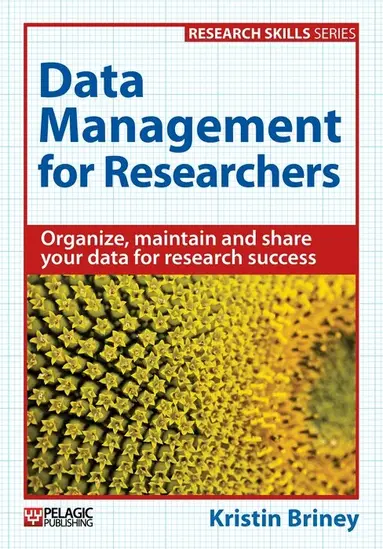
Data Management for Researchers
- Vikt 0,32 kg
656 krhos Bokus · exkl. frakt
193 kr skillnad mellan billigaste och dyraste butik i lager
Dubbelkollat idag
Jämför 2 butiker
- Bokus, 656 kr, frakt enligt butiken. Till butik (öppnas i ny flik)
I lagerFrakt: se butikenDubbelkollad 09:51
656 kr
Lägst
- Akademibokhandeln, 849 kr, frakt enligt butiken. Till butik (öppnas i ny flik)
I lagerFrakt: se butikenDubbelkollad 09:53
849 kr

Priser från butikernas flöden kan ha ändrats: det är priset hos butiken som gäller, så kontrollera det innan du handlar.
Prishistorik
Köp nu eller vänta?
Just nu kostar produkten 656 kr — 14 kr över det lägsta vi sett på 1 månad.
Pris idag
656 kr
- Lägst
- 642 kr
- Snitt
- 650 kr
- Högst
- 656 kr
| 2026-09-15 | 642 kr · Lägst hos Bokus |
|---|---|
| 2026-10-05 | 656 kr · Lägst hos Bokus |
Om produkten
Data Management for Researchers
Läs merLäs mindre
A comprehensive guide to everything scientists need to know about data management, this book is essential for researchers who need to learn how to organize, document and take care of their own data.Researchers in all disciplines are faced with the challenge of managing the growing amounts of digital data that are the foundation of their research. Kristin Briney offers practical advice and clearly explains policies and principles, in an accessible and in-depth text that will allow researchers to understand and achieve the goal of better research data management.Data Management for Researchers includes sections on:* The data problem - an introduction to the growing importance and challenges of using digital data in research. Covers both the inherent problems with managing digital information, as well as how the research landscape is changing to give more value to research datasets and code.* The data lifecycle - a framework for data's place within the research process and how data's role is changing. Greater emphasis on data sharing and data reuse will not only change the way we conduct research but also how we manage research data.* Planning for data management - covers the many aspects of data management and how to put them together in a data management plan. This section also includes sample data management plans.* Documenting your data - an often overlooked part of the data management process, but one that is critical to good management; data without documentation are frequently unusable.* Organizing your data - explains how to keep your data in order using organizational systems and file naming conventions. This section also covers using a database to organize and analyze content.* Improving data analysis - covers managing information through the analysis process. This section starts by comparing the management of raw and analyzed data and then describes ways to make analysis easier, such as spreadsheet best practices. It also examines practices for research code, including version control systems.* Managing secure and private data - many researchers are dealing with data that require extra security. This section outlines what data falls into this category and some of the policies that apply, before addressing the best practices for keeping data secure.* Short-term storage - deals with the practical matters of storage and backup and covers the many options available. This section also goes through the best practices to insure that data are not lost.* Preserving and archiving your data - digital data can have a long life if properly cared for. This section covers managing data in the long term including choosing good file formats and media, as well as determining who will manage the data after the end of the project.* Sharing/publishing your data - addresses how to make data sharing across research groups easier, as well as how and why to publicly share data. This section covers intellectual property and licenses for datasets, before ending with the altmetrics that measure the impact of publicly shared data.* Reusing data - as more data are shared, it becomes possible to use outside data in your research. This chapter discusses strategies for finding datasets and lays out how to cite data once you have found it.This book is designed for active scientific researchers but it is useful for anyone who wants to get more from their data: academics, educators, professionals or anyone who teaches data management, sharing and preservation."An excellent practical treatise on the art and practice of data management, this book is essential to any researcher, regardless of subject or discipline." -Robert Buntrock, Chemical Information Bulletin
Specifikationer
Fakta
- Vikt
- 0,32 kg
- GTIN
- 09781784270117
Uppgifter från tillverkare och butiker.