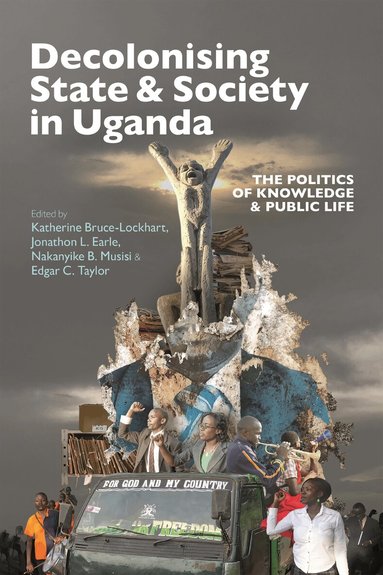
Decolonising State & Society in Uganda
561 krhos Bokus · exkl. frakt
168 kr skillnad mellan billigaste och dyraste butik i lager
Dubbelkollat idag
Jämför 2 butiker
- Bokus, 561 kr, frakt enligt butiken. Till butik (öppnas i ny flik)
I lagerFrakt: se butikenDubbelkollad 02:51
561 kr
Lägst
- Akademibokhandeln, 729 kr, frakt enligt butiken. Till butik (öppnas i ny flik)
I lagerFrakt: se butikenDubbelkollad 03:40
729 kr

Priser från butikernas flöden kan ha ändrats: det är priset hos butiken som gäller, så kontrollera det innan du handlar.
Prishistorik
Köp nu eller vänta?
Pris idag
561 kr
- Lägst
- 448 kr
- Snitt
- 634 kr
- Högst
- 772 kr
| 2026-10-07 | 579 kr · Lägst hos Akademibokhandeln |
|---|---|
| 2026-10-08 | 448 kr · Lägst hos Bokus |
| 2026-10-10 | 772 kr · Lägst hos Bokus |
| 2026-10-14 | 729 kr · Lägst hos Akademibokhandeln |
| 2026-10-15 | 561 kr · Lägst hos Bokus |
Om produkten
Decolonising State & Society in Uganda
Läs merLäs mindre
Key book on the debates surrounding the knowledge economy and decolonialization of African Studies, that brings the subject up to date for the 21st century.Decolonization of knowledge has become a major issue in African Studies in recent years, brought to the fore by social movements such as #RhodesMustFall and #BlackLivesMatter. This timely book explores the politics and disputed character of knowledge production in colonial and postcolonial Uganda, where efforts to generate forms of knowledge and solidarity that transcend colonial epistemologies draw on long histories of resistance and refusal. Bringing together scholars from Africa, Europe and North America, the contributors in this volume analyse how knowledge has been created, mobilized, and contested across a wide range of Ugandan contexts. In so doing, they reveal how Ugandans have built, disputed, and reimagined institutions of authority and knowledge production in ways that disrupt the colonial frames that continue to shape scholarly analyses and state structures. From the politics of language and gender in Bakiga naming practices to ways of knowing among the Acholi, the hampering of critical scholarship by militarism and authoritarianism, and debates over the names of streets, lakes, mountains, and other public spaces, this book shows how scholars and a wide range of Ugandan activists are reimagining the politics of knowledge in Ugandan public life.