Dubbelkollat idag
Jämför 2 butiker
- Bokus, 751 kr, frakt enligt butiken. Till butik (öppnas i ny flik)
I lagerFrakt: se butikenDubbelkollad 16:51
751 kr
Lägst
- Akademibokhandeln, 979 kr, frakt enligt butiken. Till butik (öppnas i ny flik)
Slut i lagerFrakt: se butikenDubbelkollad 16:53
979 kr

Priser från butikernas flöden kan ha ändrats: det är priset hos butiken som gäller, så kontrollera det innan du handlar.
Prishistorik
Köp nu eller vänta?
Just nu kostar produkten 751 kr — 9 kr över det lägsta vi sett på 2 veckor.
Under den tiden har det oftast legat runt 750 kr.
Pris idag
751 kr
- Lägst
- 742 kr
- Snitt
- 760 kr
- Högst
- 969 kr
| 2026-09-28 | 969 kr · Lägst hos Akademibokhandeln |
|---|---|
| 2026-09-29 | 742 kr · Lägst hos Bokus |
| 2026-10-02 | 746 kr · Lägst hos Bokus |
| 2026-10-03 | 748 kr · Lägst hos Bokus |
| 2026-10-08 | 754 kr · Lägst hos Bokus |
| 2026-10-09 | 753 kr · Lägst hos Bokus |
| 2026-10-12 | 748 kr · Lägst hos Bokus |
| 2026-10-16 | 751 kr · Lägst hos Bokus |
Om produkten
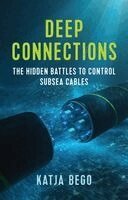
Deep Connections
Läs merLäs mindre
Deep beneath the world's oceans lurks a threat with the potential to cause major disruption and conflict: a network of cables through which almost all global internet traffic runs. These invisible but vital assets, spanning almost 1.4 million kilometres, are increasingly under siege by tech giants fuelling an AI bubble and state actors vying for control and seeking to undermine their geopolitical adversaries.We are currently witnessing a dramatic uptick in mysterious cable cuts, from the Arctic to the South China Sea. NATO ships patrol the seas to protect chokepoints. Intelligence agencies are raising the alarm about backdoors and wiretapping. While the United States and China are racing to muscle each other out of the cable network, others like Europe are rushing to reduce their dependencies and achieve tech sovereignty.Yet this battle over cables is not new. Britain's dominance over global communications helped it win the First World War. American submarines engaged in daring operations to tap Soviet cables during the Cold War. In Deep Connections, Katja Bego traces the past, present and future of this complex sub-sea infrastructure to show how its weaponization risks fragmenting the network, the open Internet - and with it, the global order.