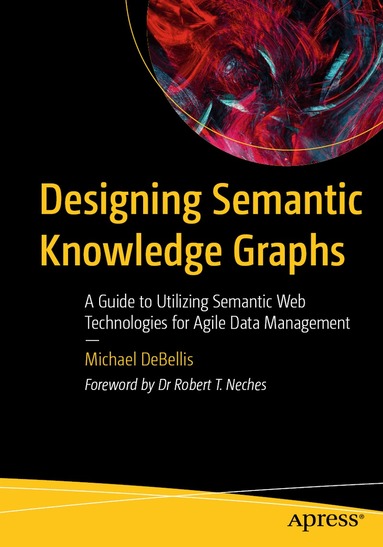
Designing Semantic Knowledge Graphs
780 krhos Bokus · exkl. frakt
239 kr skillnad mellan billigaste och dyraste butik i lager
Dubbelkollat idag
Jämför 2 butiker
- Bokus, 780 kr, frakt enligt butiken. Till butik (öppnas i ny flik)
I lagerFrakt: se butikenDubbelkollad 15:58
780 kr
Lägst
- Akademibokhandeln, 1 019 kr, frakt enligt butiken. Till butik (öppnas i ny flik)
I lagerFrakt: se butikenDubbelkollad 15:58
1 019 kr

Priser från butikernas flöden kan ha ändrats: det är priset hos butiken som gäller, så kontrollera det innan du handlar.
Prishistorik
Köp nu eller vänta?
Just nu kostar produkten 780 kr — 16 kr över det lägsta vi sett på 2 veckor.
Under den tiden har det oftast legat runt 760–780 kr.
Pris idag
780 kr
- Lägst
- 764 kr
- Snitt
- 784 kr
- Högst
- 989 kr
| 2026-09-29 | 989 kr · Lägst hos Akademibokhandeln |
|---|---|
| 2026-09-30 | 764 kr · Lägst hos Bokus |
| 2026-10-09 | 780 kr · Lägst hos Bokus |
Om produkten
Designing Semantic Knowledge Graphs
Läs merLäs mindre
Semantic Web technologies such as OWL, RDF/RDFS, SPARQL, and SHACL, offer powerful tools for managing data in flexible, meaningful, and scalable ways. As organizations increasingly adopt modern data architectures such as Data Mesh and Data Fabrics, Semantic Knowledge Graphs can serve as a unifying semantic layer, making data easier to integrate, validate, and utilize with explicit knowledge representation and automated reasoning.Yet many teams hesitate to adopt these technologies, viewing them as overly complex or academic. This book aims to challenge that perception by showing how these tools can be used practically and effectively in real-world systems. From requirements to models to code, you'll learn how Semantic Web standards can help you work with messy, evolving, real world data.Designing Semantic Knowledge Graphs is a hands-on guide for software engineers and data professionals who want to design and build semantic models that align with modern enterprise needs and integrate with Large Language Models. All techniques are illustrated using state-of-the-art free tools. All the example ontologies, SHACL models, SPARQL queries, and Python code are available on GitHub under an open source license. You Will:See how Semantic Web standards such as OWL, RDF, SPARQL, SHACL, and SWRL enable modern data architectures such as Data Mesh and Data FabricsModel domains in ways that balance top-down conceptual structure with bottom-up data realitiesDevelop strategies for data ingestion, transformation, and validation at scaleIntegrate knowledge graphs with Large Language Models and automated reasoning toolsThis Book is For:Developers, data scientists, software architects, and engineers who work with structured or semi-structured data and want to build smarter, more adaptable systems. This book will also be useful to product managers, analysts, and consultants seeking better insight into their organization's data strategy.