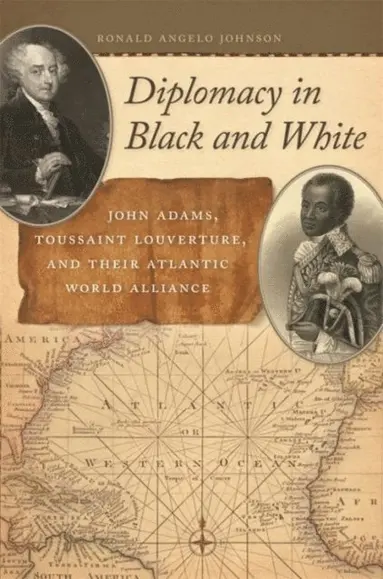
Diplomacy in Black and White
Dubbelkollat idag
Jämför 1 butik
- Bokus, 456 kr, frakt enligt butiken. Till butik (öppnas i ny flik)
I lagerFrakt: se butikenDubbelkollad 08:51
456 kr
Lägst

Priser från butikernas flöden kan ha ändrats: det är priset hos butiken som gäller, så kontrollera det innan du handlar.
Prishistorik
Köp nu eller vänta?
Just nu kostar produkten 456 kr — 10 kr över det lägsta vi sett på 1 månad.
Pris idag
456 kr
- Lägst
- 446 kr
- Snitt
- 452 kr
- Högst
- 456 kr
| 2026-09-15 | 446 kr · Lägst hos Bokus |
|---|---|
| 2026-10-06 | 456 kr · Lägst hos Bokus |
Om produkten
Diplomacy in Black and White
Läs merLäs mindre
From 1798 to 1801, during the Haitian Revolution, President John Adams and Toussaint Louverture forged diplomatic relations that empowered white Americans to embrace freedom and independence for people of color in Saint-Domingue. The United States supported the Dominguan revolutionaries with economic assistance and arms and munitions; the conflict was also the U.S. Navy's first military action on behalf of a foreign ally. This cross-cultural cooperation was of immense and strategic importance as it helped to bring forth a new nation: Haiti.Diplomacy in Black and White is the first book on the Adams-Louverture alliance. Historian and former diplomat Ronald Angelo Johnson details the aspirations of the Americans and Dominguans-two revolutionary peoples-and how they played significant roles in a hostile Atlantic world. Remarkably, leaders of both governments established multiracial relationships amid environments dominated by slavery and racial hierarchy. And though U.S.-Dominguan diplomacy did not end slavery in the United States, it altered Atlantic world discussions of slavery and race well into the twentieth century.Diplomacy in Black and White reflects the capacity of leaders from disparate backgrounds to negotiate political and societal constraints to make lives better for the groups they represent. Adams and Louverture brought their peoples to the threshold of a lasting transracial relationship. And their shared history reveals the impact of decisions made by powerful people at pivotal moments. But in the end, a permanent alliance failed to emerge, and instead, the two republics born of revolution took divergent paths.