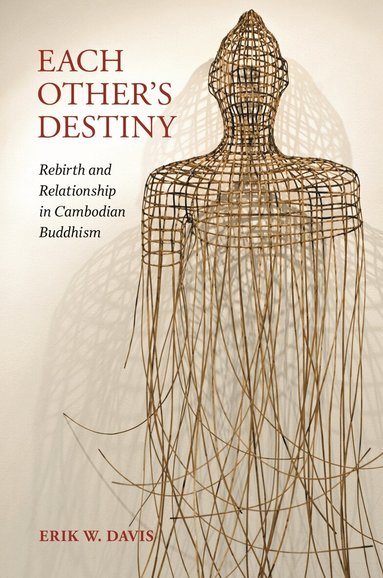
Each Other's Destiny
847 krhos Bokus · exkl. frakt
252 kr skillnad mellan billigaste och dyraste butik i lager
Dubbelkollat idag
Jämför 2 butiker
- Bokus, 847 kr, frakt enligt butiken. Till butik (öppnas i ny flik)
I lagerFrakt: se butikenDubbelkollad 07:51
847 kr
Lägst
- Akademibokhandeln, 1 099 kr, frakt enligt butiken. Till butik (öppnas i ny flik)
I lagerFrakt: se butikenDubbelkollad 07:53
1 099 kr

Priser från butikernas flöden kan ha ändrats: det är priset hos butiken som gäller, så kontrollera det innan du handlar.
Prishistorik
Köp nu eller vänta?
Just nu kostar produkten 847 kr — 3 kr över det lägsta vi sett på 2 veckor.
Under den tiden har det oftast legat runt 840–850 kr.
Pris idag
847 kr
- Lägst
- 844 kr
- Snitt
- 878 kr
- Högst
- 1 099 kr
| 2026-10-02 | 1 099 kr · Lägst hos Akademibokhandeln |
|---|---|
| 2026-10-03 | 844 kr · Lägst hos Bokus |
| 2026-10-05 | 1 099 kr · Lägst hos Akademibokhandeln |
| 2026-10-06 | 849 kr · Lägst hos Bokus |
| 2026-10-10 | 848 kr · Lägst hos Bokus |
| 2026-10-11 | 847 kr · Lägst hos Bokus |
| 2026-10-13 | 844 kr · Lägst hos Bokus |
| 2026-10-16 | 849 kr · Lägst hos Bokus |
| 2026-10-17 | 847 kr · Lägst hos Bokus |
Om produkten
Each Other's Destiny
Läs merLäs mindre
Each Other's Destiny presents stories of contemporary Cambodians who remember past lives and explores how memories of these pasts shape their present. Erik Davis examines accounts from children, adults, and elders who have retained past-life memories and reveals how Cambodians understand karma to work across lifetimes, and the central role of relationships in Buddhist moral progress. He suggests a new way of answering long-standing questions within Buddhism: what is reborn, and what does that mean we are? The book focuses on six individuals Davis interviewed or researched extensively between 2003 and 2006. Two Cambodian women describe being kidnapped and taken to hell, revealing how Near-Death Experiences are shaped by cultural imagination and expectations. Children who remember past lives provide insight into normative understandings of rebirth, and the karmic and ethical processes that underlie them. In one striking case, a young girl recalls being her own uncle, who died fighting for the Khmer Rouge in the 1970s. Davis describes the attempt to ritually force past-life amnesia on the child, revealing the importance of relatedness and karmic debts. He identifies a view of the individual and their rebirths that centers on karmically significant relationships, described as sharing a nissăy, a word frequently translated as "destiny" or fate." This view, which appears normative in Cambodia, fundamentally shapes the way Cambodians think about relationships, family, maturation, and moral progress. Davis then turns to men who have deployed past-life memories for personal advantage, including former Cambodian Prime Minister Hun Sen, who claims identity with a past Khmer king, and a popular lay teacher professing to be Maitreya, the buddha of the future. These contrasting cases emphasize individual accomplishment and autonomy rather than relational obligations. The final chapter follows a devout elder Buddhist woman who, as a child, integrated her past-life and present-life families. Her account exemplifies the relationality of past lives, karma, and destiny while affirming Buddhism's ultimate goal: to end rebirth and relationality entirely. Through these interconnected stories, Davis argues that it is karmic relationships-not individuals-that are reborn, suggesting that we are, in a meaningful way, each other's destiny.