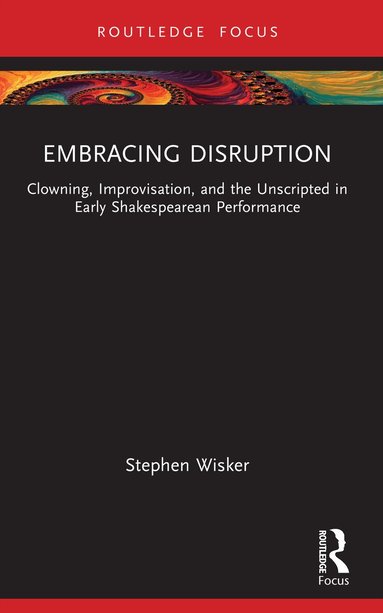
Embracing Disruption
- Vikt 0,25 kg
427 krhos Bokus · exkl. frakt
132 kr skillnad mellan billigaste och dyraste butik i lager
Dubbelkollat idag
Jämför 2 butiker
- Bokus, 427 kr, frakt enligt butiken. Till butik (öppnas i ny flik)
I lagerFrakt: se butikenDubbelkollad 14:51
427 kr
Lägst
- Akademibokhandeln, 559 kr, frakt enligt butiken. Till butik (öppnas i ny flik)
I lagerFrakt: se butikenDubbelkollad 14:53
559 kr

Priser från butikernas flöden kan ha ändrats: det är priset hos butiken som gäller, så kontrollera det innan du handlar.
Prishistorik
Köp nu eller vänta?
Just nu kostar produkten 427 kr — 5 kr över det lägsta vi sett på 2 veckor.
Under den tiden har det oftast legat runt 420–430 kr.
Pris idag
427 kr
- Lägst
- 422 kr
- Snitt
- 432 kr
- Högst
- 549 kr
| 2026-09-30 | 549 kr · Lägst hos Akademibokhandeln |
|---|---|
| 2026-10-01 | 422 kr · Lägst hos Bokus |
| 2026-10-04 | 424 kr · Lägst hos Bokus |
| 2026-10-08 | 428 kr · Lägst hos Bokus |
| 2026-10-11 | 427 kr · Lägst hos Bokus |
| 2026-10-12 | 425 kr · Lägst hos Bokus |
| 2026-10-16 | 427 kr · Lägst hos Bokus |
Om produkten
Embracing Disruption
Läs merLäs mindre
This volume celebrates the centrality of clowning in Shakespeare's conception of theatre and explores how he purposefully invited the clown's anarchic energy into the heart of his dramaturgy.Clowning was a potent but divisive force in the theater of Shakespeare's time, challenging the emerging tyranny of decorum and the developing notion of the authorial voice. As such, the figure of the clown is key to understanding the pervasive tension between existing and emergent forms of Elizabethan theater, and unlocks forgotten levels of meaning in Shakespeare's plays, meanings that were only fully experienced in performance rather than on the page. The great clown Dick Tarleton dominated the London theater of the 1580s and deeply informed Shakespeare's understanding of the anarchic power of performance. By the 1590s, however, the clown's voice was increasingly silenced by emerging theater practice intent on authorial control and Elizabethan codes of decorum. Against the dominant critical tide, Shakespeare continued to embrace clowning and worked closely with Will Kemp - Tarleton's successor as the greatest clown of his age - specifically and deliberately placing him alongside his leading man, Richard Burbage, the originator of the roles of Romeo, Hal, Hamlet and many others. Through an analysis of key scenes in Romeo and Juliet and Henry IV, Embracing Disruption illustrates the enormously generative, unstable, and compelling relationship between these two actors, Burbage and Kemp - the hero and the clown - and how their extraordinary dynamic was experienced on the stage rather than on the page. This hero-clown dynamic continues even after Kemp's departure from Shakespeare's company: Hamlet features the ghosts of Tarleton and Kemp, two clowns deeply informing Burbage's performance as the hero. Then a similar dynamic emerges between Kemp's replacement, a very different clown in Robert Armin playing the Fool opposite Burbage in King Lear. In each instance, the presence of the clown crucially informs the audience's understanding of the hero. Moreover, Shakespeare's increasingly sophisticated deployment of clowning comments on and resists the transformation and gentrification of the theater that defined the Elizabethan era.This study will be of great interest to students and scholars in Performance studies and Shakespeare studies.
Specifikationer
Fakta
- Vikt
- 0,25 kg
- GTIN
- 09781032740812
Uppgifter från tillverkare och butiker.