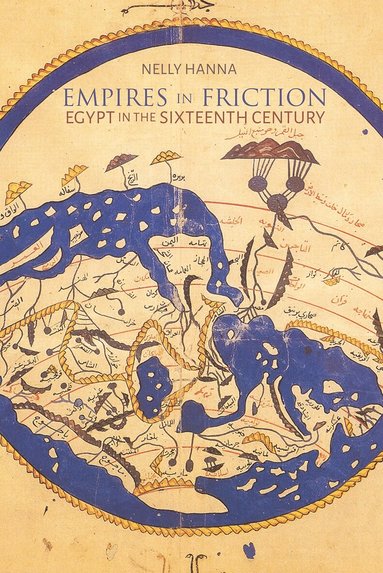
Empires in Friction
714 krhos Bokus · exkl. frakt
215 kr skillnad mellan billigaste och dyraste butik i lager
Dubbelkollat idag
Jämför 2 butiker
- Bokus, 714 kr, frakt enligt butiken. Till butik (öppnas i ny flik)
I lagerFrakt: se butikenDubbelkollad 00:51
714 kr
Lägst
- Akademibokhandeln, 929 kr, frakt enligt butiken. Till butik (öppnas i ny flik)
I lagerFrakt: se butikenDubbelkollad 00:53
929 kr

Priser från butikernas flöden kan ha ändrats: det är priset hos butiken som gäller, så kontrollera det innan du handlar.
Prishistorik
Köp nu eller vänta?
Just nu kostar produkten 714 kr — 26 kr över det lägsta vi sett på 3 veckor.
Under den tiden har det oftast legat runt 690–710 kr.
Pris idag
714 kr
- Lägst
- 688 kr
- Snitt
- 702 kr
- Högst
- 899 kr
| 2026-09-19 | 899 kr · Lägst hos Akademibokhandeln |
|---|---|
| 2026-09-20 | 688 kr · Lägst hos Bokus |
| 2026-10-10 | 714 kr · Lägst hos Bokus |
Om produkten
Empires in Friction
Läs merLäs mindre
In 1517, the Ottoman Empire had finally defeated the Mamluk Sultanate in Egypt, completing their conquest of the Middle East and turning Egypt into a province of the Ottoman Empire. While much has been documented about the Mamluk period until 1517, publications on the historical record about the sixteenth century reveals little from distinctly Egyptian perspectives. In Empires in Friction, Nelly Hanna explores this transitional period and provides insight into the intricate dynamics of imperial control and political transition. With an original approach to understanding empire, Hanna challenges traditional narratives that emphasize the centralization of power and the dominance of the capital. Instead, she proposes a nuanced paradigm that focuses on the imperial problem of distance, the autonomy of provinces, and the continuity of local customs and economic activities across different imperial regimes. Hanna dives into the financial, economic, and commercial domains where Ottomanization happened. In each, the new ruling power faced challenges in understanding the existing processes, but ultimately the ability of Egyptian merchants to prosper under Ottoman rule shows how Egypt remained under the Ottomans for so many centuries. Hanna deftly demonstrates the strain and areas of conformity in transferring from one imperial system with specific traditions to another. Fused together through the continuation of provincial operation, the Mamluk and Ottoman rules were not observably differentiable during the sixteenth century as the periphery operated at an arm's length from the Ottoman capital.