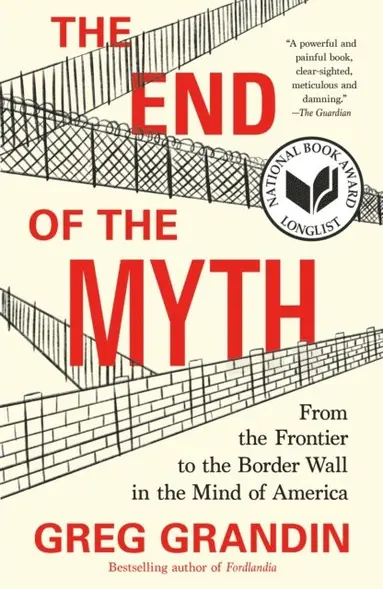
End of the Myth
Dubbelkollat idag
Jämför 1 butik
- Bokus, 210 kr, frakt enligt butiken. Till butik (öppnas i ny flik)
I lagerFrakt: se butikenDubbelkollad 05:51
210 kr
Lägst

Priser från butikernas flöden kan ha ändrats: det är priset hos butiken som gäller, så kontrollera det innan du handlar.
Prishistorik
Köp nu eller vänta?
Just nu kostar produkten 210 kr — 4 kr över det lägsta vi sett på 1 månad.
Pris idag
210 kr
- Lägst
- 206 kr
- Snitt
- 208 kr
- Högst
- 210 kr
| 2026-09-15 | 206 kr · Lägst hos Bokus |
|---|---|
| 2026-10-12 | 210 kr · Lägst hos Bokus |
Om produkten
End of the Myth
Läs merLäs mindre
WINNER OF THE PULITZER PRIZEA new and eye-opening interpretation of the meaning of the frontier, from early westward expansion to Trump's border wall.Ever since this nation's inception, the idea of an open and ever-expanding frontier has been central to American identity. Symbolizing a future of endless promise, it was the foundation of the United States' belief in itself as an exceptional nation - democratic, individualistic, forward-looking. Today, though, America hasa new symbol: the border wall. In The End of the Myth, acclaimed historian Greg Grandin explores the meaning of the frontier throughout the full sweep of U.S. history - from the American Revolution to the War of 1898, the New Deal to the election of 2016. For centuries, he shows, America's constant expansion - fighting wars and opening markets - served as a "gate of escape," helping to deflect domestic political and economic conflicts outward. But this deflection meant that the country's problems, from racism to inequality, were never confronted directly. And now, the combined catastrophe of the 2008 financial meltdown and our unwinnable wars in the Middle East have slammed this gate shut, bringing political passions that had long been directed elsewhere back home.It is this new reality, Grandin says, that explains the rise of reactionary populism and racist nationalism, the extreme anger and polarization that catapulted Trump to the presidency. The border wall may or may not be built, but it will survive as a rallying point, an allegorical tombstone marking the end of American exceptionalism.