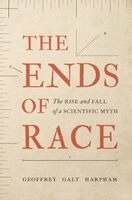
Ends of Race
617 krhos Bokus · exkl. frakt
182 kr skillnad mellan billigaste och dyraste butik i lager
Dubbelkollat idag
Jämför 2 butiker
- Bokus, 617 kr, frakt enligt butiken. Till butik (öppnas i ny flik)
I lagerFrakt: se butikenDubbelkollad 20:51
617 kr
Lägst
- Akademibokhandeln, 799 kr, frakt enligt butiken. Till butik (öppnas i ny flik)
I lagerFrakt: se butikenDubbelkollad 20:53
799 kr

Priser från butikernas flöden kan ha ändrats: det är priset hos butiken som gäller, så kontrollera det innan du handlar.
Prishistorik
Köp nu eller vänta?
Pris idag
617 kr
- Lägst
- 617 kr
- Snitt
- 663 kr
- Högst
- 799 kr
| 2026-10-14 | 799 kr · Lägst hos Akademibokhandeln |
|---|---|
| 2026-10-15 | 617 kr · Lägst hos Bokus |
Om produkten
Ends of Race
Läs merLäs mindre
A new history of the scientific inquiry into raceThe attempt to define the concept of race in the eighteenth and nineteenth centuries is often described as a corrupt "pseudo-science," but in this strikingly original account, Geoffrey Galt Harpham describes the inquiry into race as a serious scientific project undertaken by some of the leading figures of the time. In a "skeletal history" of this project, Harpham tracks the rise and fall of racial science, focusing on the central role played by craniology, or the study of skulls, in key debates in Germany, the United States, and France.Emerging at the end of the eighteenth century as a way of thinking about human variation, the concept of race became entangled in an extraordinarily wide range of scientific, philosophical, theological, and political debates about issues ranging from the place of humanity in the natural world to the rationales for colonization and slavery. But at the end of the nineteenth century, a number of prominent scientists came together to announce the failure of the century-long attempt to define race or even to locate racial markers in the human body-only to see the concept taken up by others, including W.E.B. Du Bois, who sought to preserve the concept as essential to the nonscientific ends of solidarity and identity.With this probing and vivid narrative account of the scientific inquiry into human variation, Harpham provides a new way of approaching the history of race, introduces a host of previously little-known figures, explores the larger contexts and inner dynamics of the discourse on race, and questions the ends that the concept of race serves today.