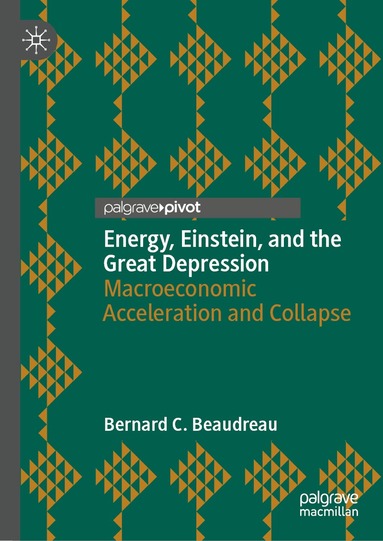
Energy, Einstein, and the Great Depression
443 krhos Bokus · exkl. frakt
136 kr skillnad mellan billigaste och dyraste butik i lager
Dubbelkollat idag
Jämför 2 butiker
- Bokus, 443 kr, frakt enligt butiken. Till butik (öppnas i ny flik)
I lagerFrakt: se butikenDubbelkollad 22:51
443 kr
Lägst
- Akademibokhandeln, 579 kr, frakt enligt butiken. Till butik (öppnas i ny flik)
I lagerFrakt: se butikenDubbelkollad 22:53
579 kr

Priser från butikernas flöden kan ha ändrats: det är priset hos butiken som gäller, så kontrollera det innan du handlar.
Prishistorik
Köp nu eller vänta?
Pris idag
443 kr
- Lägst
- 442 kr
- Snitt
- 463 kr
- Högst
- 619 kr
| 2026-10-03 | 619 kr · Lägst hos Akademibokhandeln |
|---|---|
| 2026-10-04 | 474 kr · Lägst hos Bokus |
| 2026-10-07 | 447 kr · Lägst hos Bokus |
| 2026-10-09 | 446 kr · Lägst hos Bokus |
| 2026-10-11 | 444 kr · Lägst hos Bokus |
| 2026-10-12 | 443 kr · Lägst hos Bokus |
| 2026-10-13 | 442 kr · Lägst hos Bokus |
| 2026-10-16 | 443 kr · Lägst hos Bokus |
Om produkten
Energy, Einstein, and the Great Depression
Läs merLäs mindre
This book examines the macroeconomic consequences of rapid process innovation during the 1920s and early 1930s through Albert Einstein's writings on technological unemployment and purchasing power. It identifies a concrete, economy‐wide source of "technical progress" compatible with physical laws: the transition to electric unit drive and the rise of large‐scale, interconnected utilities, which increased machine speeds and effective rated capacity across U.S. industry. The author provides a structured framework that links physical principles to macroeconomic outcomes, an empirically grounded narrative on electrification and unit drive, and a concise reassessment of "technological unemployment" as a macro‐structural issue rather than a firm‐level anomaly.The study builds on a kinetics‐based account of wealth‐creating material processes and models production using classical mechanics, thermodynamics, and process engineering to show how acceleration raised measured productivity while firms faced aggregate‐demand constraints. It documents 1920s evidence on machine speed and acceleration, integrates these mechanisms into a macroeconomic model with acceleration, and revisits the 1930s policy debate on hours, wages, and institutional design. The analysis distinguishes Einstein's diagnosis regarding technology‐driven labor displacement from his broader reflections on capitalism versus socialism, positioning both within the economic and intellectual history of the period. The book closes by outlining structural impediments to incomizing potential output, drawing lessons from the post‐1939 recovery, and clarifying where Einstein's policy instincts align with the historical record.