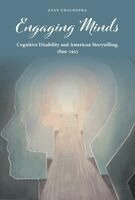
Engaging Minds
995 krhos Bokus · exkl. frakt
294 kr skillnad mellan billigaste och dyraste butik i lager
Dubbelkollat idag
Jämför 2 butiker
- Bokus, 995 kr, frakt enligt butiken. Till butik (öppnas i ny flik)
I lagerFrakt: se butikenDubbelkollad 19:51
995 kr
Lägst
- Akademibokhandeln, 1 289 kr, frakt enligt butiken. Till butik (öppnas i ny flik)
I lagerFrakt: se butikenDubbelkollad 19:53
1 289 kr

Priser från butikernas flöden kan ha ändrats: det är priset hos butiken som gäller, så kontrollera det innan du handlar.
Prishistorik
Köp nu eller vänta?
Pris idag
995 kr
- Lägst
- 995 kr
- Snitt
- 1 018 kr
- Högst
- 1 289 kr
| 2026-10-04 | 1 289 kr · Lägst hos Akademibokhandeln |
|---|---|
| 2026-10-05 | 995 kr · Lägst hos Bokus |
Om produkten
Engaging Minds
Läs merLäs mindre
Characters with cognitive differences appeared in literary fiction long before the clinical awakening to neurodivergence; and so, their creators were tasked with depicting them without contemporary classifications or labels. These writers responded to questions that authors of disability literature continue to face today. How and to what extent should disabled cognition show up on the page? When does imaginative attention become creative exploitation? From the late nineteenth to the mid-twentieth century, such writers as Frank Norris, Jean Toomer, William Faulkner, and Pearl S. Buck employed techniques of narration, vision, story progression, and narrative time to explore different understandings of how disabled minds think and feel-as well as how these minds might be brought to bear on the form and function of literature itself.In Engaging Minds: Cognitive Disability and American Storytelling, 1899-1953, Evan Chaloupka argues these and other authors did more than just unsettle the divisions between normalcy and disability that were central to eugenics and institutionalization movements; they created progressive literary structures that encouraged readers to develop their understanding of disability as it was disclosed, educed, and even obscured by narrative. With close readings of select works from a half century of profound change, Chaloupka examines how authors deployed novel storytelling strategies at key moments in American literary and cultural history to bring readers into new relationships with cognitive disability and mental difference. This book also models a mode of rhetorical reading that will be of interest to readers concerned with ways the techniques of storytelling enable the intimacies of fiction-however distant writer, reader, and character might at first seem from one another.