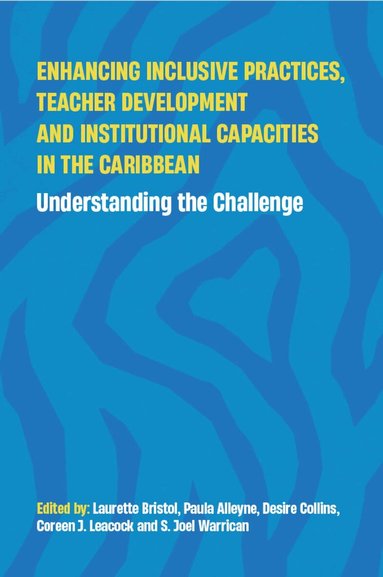
Enhancing Inclusive Practices, Teacher Development and Institutional Capacities in the Caribbean
1 098 krhos Bokus · exkl. frakt
331 kr skillnad mellan billigaste och dyraste butik i lager
Dubbelkollat idag
Jämför 2 butiker
- Bokus, 1 098 kr, frakt enligt butiken. Till butik (öppnas i ny flik)
I lagerFrakt: se butikenDubbelkollad 15:51
1 098 kr
Lägst
- Akademibokhandeln, 1 429 kr, frakt enligt butiken. Till butik (öppnas i ny flik)
I lagerFrakt: se butikenDubbelkollad 15:53
1 429 kr

Priser från butikernas flöden kan ha ändrats: det är priset hos butiken som gäller, så kontrollera det innan du handlar.
Prishistorik
Köp nu eller vänta?
Pris idag
1 098 kr
- Lägst
- 1 098 kr
- Snitt
- 1 208 kr
- Högst
- 1 429 kr
| 2026-10-15 | 1 429 kr · Lägst hos Akademibokhandeln |
|---|---|
| 2026-10-16 | 1 098 kr · Lägst hos Bokus |
Om produkten
Enhancing Inclusive Practices, Teacher Development and Institutional Capacities in the Caribbean
Läs merLäs mindre
Lingering colonial influences, environmental changes, and international events make the provision of equitable, quality education in the Caribbean challenging. As a group of small states, the Caribbean faces complex educational crises that disrupt inclusion, access, and participation.This edited collection sheds light on current research that tackles educational development concerns in the Caribbean, with the three chapters from African spaces providing a point of south - south reflection. Noting the important role that education plays in the empowerment of people and the social, economic, and political advancements of a society, the book illustrates interdisciplinary approaches towards educational reform, bringing to the fore methodologies and insights for enhancing inclusive practices, teaching pedagogies, and institutional capacities within the region.Within the context of developing nations, the chapters explore policies, practices, and institutional frameworks which exist or can be developed to foster the provision of equitable quality education at multiple levels within education delivery. They consider empirical and conceptual frameworks that can be combined to guide educational improvement in the Caribbean and Africa, provide guidance and practice examples which respond to a diverse audience inclusive of policymakers, teachers, and students, and advance international and regional discussions to accelerate progress towards equitable education.