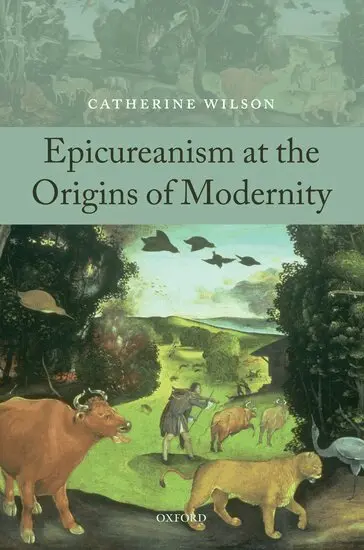
Epicureanism at the Origins of Modernity
- Vikt 0,47 kg
846 krhos Bokus · exkl. frakt
253 kr skillnad mellan billigaste och dyraste butik i lager
Dubbelkollat idag
Jämför 2 butiker
- Bokus, 846 kr, frakt enligt butiken. Till butik (öppnas i ny flik)
I lagerFrakt: se butikenDubbelkollad 08:51
846 kr
Lägst
- Akademibokhandeln, 1 099 kr, frakt enligt butiken. Till butik (öppnas i ny flik)
I lagerFrakt: se butikenDubbelkollad 08:53
1 099 kr

Priser från butikernas flöden kan ha ändrats: det är priset hos butiken som gäller, så kontrollera det innan du handlar.
Prishistorik
Köp nu eller vänta?
Just nu kostar produkten 846 kr — 18 kr över det lägsta vi sett på 1 månad.
Pris idag
846 kr
- Lägst
- 828 kr
- Snitt
- 836 kr
- Högst
- 846 kr
| 2026-09-15 | 828 kr · Lägst hos Bokus |
|---|---|
| 2026-10-13 | 846 kr · Lägst hos Bokus |
Om produkten
Epicureanism at the Origins of Modernity
Läs merLäs mindre
This landmark study examines the role played by the rediscovery of the writings of the ancient atomists, Epicurus and Lucretius, in the articulation of the major philosophical systems of the seventeenth century, and, more broadly, their influence on the evolution of natural science and moral and political philosophy. The target of sustained and trenchant philosophical criticism by Cicero, and of opprobrium by the Christian Fathers of the early Church, for its unflinching commitment to the absence of divine supervision and the finitude of life, the Epicurean philosophy surfaced again in the period of the Scientific Revolution, when it displaced scholastic Aristotelianism. Both modern social contract theory and utilitarianism in ethics were grounded in its tenets. Catherine Wilson shows how the distinctive Epicurean image of the natural and social worlds took hold in philosophy, and how it is an acknowledged, and often unacknowledged presence in the writings of Descartes, Gassendi, Hobbes, Boyle, Locke, Leibniz, Berkeley. With chapters devoted to Epicurean physics and cosmology, the corpuscularian or "mechanical" philosophy, the question of the mortality of the soul, the grounds of political authority, the contested nature of the experimental philosophy, sensuality, curiosity, and the role of pleasure and utility in ethics, the author makes a persuasive case for the significance of materialism in seventeenth-century philosophy without underestimating the depth and significance of the opposition to it, and for its continued importance in the contemporary world. Lucretius's great poem, On the Nature of Things, supplies the frame of reference for this deeply-researched inquiry into the origins of modern philosophy..
Specifikationer
Fakta
- Vikt
- 0,47 kg
- GTIN
- 09780199595556
Uppgifter från tillverkare och butiker.