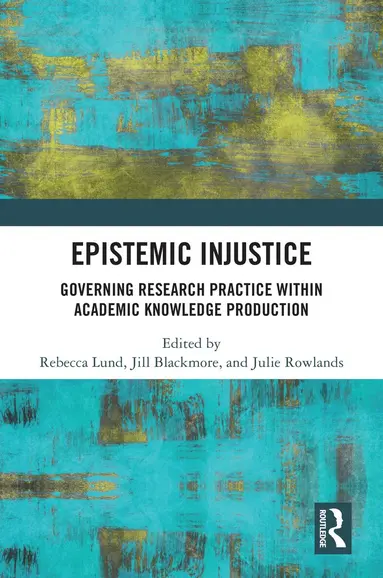
Epistemic Injustice
- Vikt 0,26 kg
675 krhos Bokus · exkl. frakt
204 kr skillnad mellan billigaste och dyraste butik i lager
Dubbelkollat idag
Jämför 2 butiker
- Bokus, 675 kr, frakt enligt butiken. Till butik (öppnas i ny flik)
I lagerFrakt: se butikenDubbelkollad 04:51
675 kr
Lägst
- Akademibokhandeln, 879 kr, frakt enligt butiken. Till butik (öppnas i ny flik)
I lagerFrakt: se butikenDubbelkollad 04:53
879 kr

Priser från butikernas flöden kan ha ändrats: det är priset hos butiken som gäller, så kontrollera det innan du handlar.
Prishistorik
Köp nu eller vänta?
Just nu kostar produkten 675 kr — 16 kr över det lägsta vi sett på 1 månad.
Under den tiden har det oftast legat runt 660–670 kr.
Pris idag
675 kr
- Lägst
- 659 kr
- Snitt
- 668 kr
- Högst
- 676 kr
| 2026-09-15 | 665 kr · Lägst hos Bokus |
|---|---|
| 2026-09-17 | 663 kr · Lägst hos Bokus |
| 2026-09-20 | 661 kr · Lägst hos Bokus |
| 2026-09-23 | 662 kr · Lägst hos Bokus |
| 2026-09-25 | 660 kr · Lägst hos Bokus |
| 2026-09-27 | 659 kr · Lägst hos Bokus |
| 2026-09-30 | 660 kr · Lägst hos Bokus |
| 2026-10-02 | 665 kr · Lägst hos Bokus |
| 2026-10-04 | 668 kr · Lägst hos Bokus |
| 2026-10-08 | 675 kr · Lägst hos Bokus |
| 2026-10-10 | 674 kr · Lägst hos Bokus |
| 2026-10-11 | 672 kr · Lägst hos Bokus |
| 2026-10-12 | 670 kr · Lägst hos Bokus |
| 2026-10-16 | 672 kr · Lägst hos Bokus |
| 2026-10-20 | 671 kr · Lägst hos Bokus |
| 2026-10-22 | 670 kr · Lägst hos Bokus |
| 2026-10-24 | 673 kr · Lägst hos Bokus |
| 2026-10-28 | 676 kr · Lägst hos Bokus |
| 2026-10-29 | 675 kr · Lägst hos Bokus |
Om produkten
Epistemic Injustice
Läs merLäs mindre
This book illustrates how feminist knowledge and postcolonial knowledge are marginalized in universities due to policies, organizational structures, and knowledge hierarchies that privilege metrics as measures of success and narrow views of science and research.The changing relationship between the state and knowledge production is a critical issue for universities and governments when disinformation is creating a crisis in expertise and trust in democratic institutions. Yet academic autonomy is being undermined by processes of corporatization of the university: managerialism, marketisation, technologization and privatization. Epistemic injustice occurs when particular knowledges are privileged due to policy priorities, metrics and organizational practices as these are underpinned by unequal power relations that inform who does what research and with whom. In turn, injustice occurs when knowledge is evaluated primarily on the basis of its usefulness. The chapters in this book illustrate the epistemic implications of changing institutional and organizational conditions produced by narrow conceptions of 'knowledge' and 'good science' and relations between them. It explores these arrangements at the level of colonial and geopolitical relations, and their effects in terms of institutional processes, practices, and agency. The text shows how a lack of epistemic diversity reinforces structural and cultural racial and gender injustices arising from colonialism, patriarchy, and dominant views of science.This volume will appeal to policy makers and researchers in higher education reform and scholars interested in changing academic practices from feminist and postcolonial perspectives. It was originally published as a special issue of Critical Studies in Education.
Specifikationer
Fakta
- Vikt
- 0,26 kg
- GTIN
- 09781032880839
Uppgifter från tillverkare och butiker.