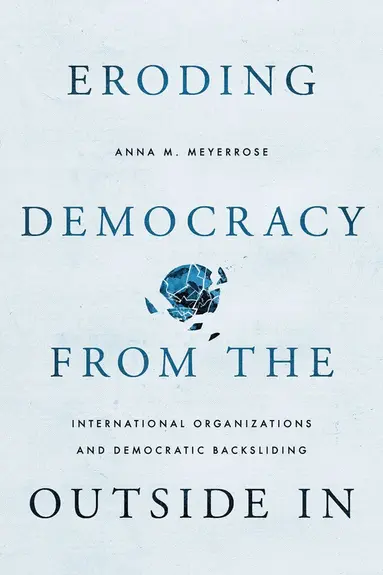
Eroding Democracy from the Outside In
- Vikt 0,41 kg
345 krhos Bokus · exkl. frakt
104 kr skillnad mellan billigaste och dyraste butik i lager
Dubbelkollat idag
Jämför 2 butiker
- Bokus, 345 kr, frakt enligt butiken. Till butik (öppnas i ny flik)
I lagerFrakt: se butikenDubbelkollad 06:51
345 kr
Lägst
- Akademibokhandeln, 449 kr, frakt enligt butiken. Till butik (öppnas i ny flik)
I lagerFrakt: se butikenDubbelkollad 06:53
449 kr

Priser från butikernas flöden kan ha ändrats: det är priset hos butiken som gäller, så kontrollera det innan du handlar.
Prishistorik
Köp nu eller vänta?
Just nu kostar produkten 345 kr — 7 kr över det lägsta vi sett på 1 månad.
Pris idag
345 kr
- Lägst
- 338 kr
- Snitt
- 342 kr
- Högst
- 345 kr
| 2026-09-15 | 338 kr · Lägst hos Bokus |
|---|---|
| 2026-10-05 | 345 kr · Lägst hos Bokus |
Om produkten
Eroding Democracy from the Outside In
Läs merLäs mindre
The end of the Cold War gave way to a fundamental shift in the structure of the international system. It was an era characterized above all by liberal triumphalism in which Western politicians and policymakers turned to international organizations (IOs) to spread and reinforce liberal values. These IOs, backed by the West, proliferated at exceedingly high rates, with democracies in particular becoming fully integrated members. Scholars agreed with policymakers, finding overwhelming evidence that these IOs were positive forces for democracy, and for several decades liberal democracy appeared ascendant. However, beginning around 2010, liberal democracy's forward march abruptly halted, and ongoing evidence of democratic backsliding ---an historically unprecedented phenomenon in which democratically elected officials erode liberal democratic institutions--- calls into question the post-Cold War narrative of liberal democratic triumphalism. What explains democracy's sudden reversal of fortune and the emergence of this new form of democratic regression on the heels of unmatched international integration and support for liberal democracy? Eroding Democracy from the Outside In proposes a novel international-level theory of democratic backsliding. In the decades after the Soviet Union fell, IOs became not only much more common, but a certain subset of these organizations also gained unprecedented power and influence over domestic affairs and substantive, highly salient economic and political policy outcomes. One unintended consequence of this increased delegation of economic and political policy authority to powerful IOs has been that over time core domestic representative institutions, such as political parties and legislatures, have been eroded, while power has been increasingly concentrated in the hands of executives who represent their states at the international level. These weak institutions, unable to either represent citizens' wide-ranging interests or act as a check on growing executive power, have paved the way for would-be autocrats to consolidate their hold on the state. The result all too often has been democratic backsliding.
Specifikationer
Fakta
- Vikt
- 0,41 kg
- GTIN
- 09780197816448
Uppgifter från tillverkare och butiker.