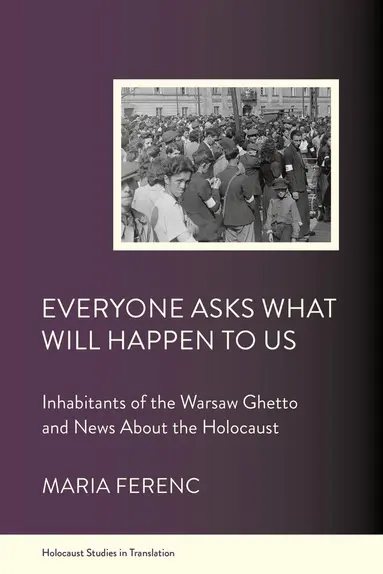
Everyone Asks What Will Happen to Us
1 688 krhos Bokus · exkl. frakt
511 kr skillnad mellan billigaste och dyraste butik i lager
Dubbelkollat idag
Jämför 2 butiker
- Bokus, 1 688 kr, frakt enligt butiken. Till butik (öppnas i ny flik)
I lagerFrakt: se butikenDubbelkollad 06:51
1 688 kr
Lägst
- Akademibokhandeln, 2 199 kr, frakt enligt butiken. Till butik (öppnas i ny flik)
I lagerFrakt: se butikenDubbelkollad 06:53
2 199 kr

Priser från butikernas flöden kan ha ändrats: det är priset hos butiken som gäller, så kontrollera det innan du handlar.
Prishistorik
Köp nu eller vänta?
Just nu kostar produkten 1 688 kr — 13 kr över det lägsta vi sett på 1 månad.
Under den tiden har det oftast legat runt 1 700–2 280 kr.
Pris idag
1 688 kr
- Lägst
- 1 675 kr
- Snitt
- 2 095 kr
- Högst
- 2 372 kr
| 2026-09-15 | 2 281 kr · Lägst hos Bokus |
|---|---|
| 2026-10-10 | 2 372 kr · Lägst hos Bokus |
| 2026-10-16 | 2 229 kr · Lägst hos Akademibokhandeln |
| 2026-10-17 | 1 711 kr · Lägst hos Bokus |
| 2026-10-18 | 1 678 kr · Lägst hos Bokus |
| 2026-10-22 | 1 675 kr · Lägst hos Bokus |
| 2026-10-24 | 1 698 kr · Lägst hos Bokus |
| 2026-10-27 | 1 701 kr · Lägst hos Bokus |
| 2026-10-28 | 1 705 kr · Lägst hos Bokus |
| 2026-10-29 | 1 704 kr · Lägst hos Bokus |
| 2026-11-01 | 1 688 kr · Lägst hos Bokus |
Om produkten
Everyone Asks What Will Happen to Us
Läs merLäs mindre
Everyone Asks What Will Happen to Us traces how Jews trapped in the Warsaw Ghetto wrestled with questions that had troubled them since the occupation began: when will the war end, and what will become of us? In examining the production and spread of knowledge in the Warsaw Ghetto, Maria Ferenc returns the point of view of the victims to its rightful place. She reveals illusions, imagination, and the social reception of a constructed image of events taking place on the other side of the Ghetto walls. Individually and together, ghetto inhabitants created a picture of the outside world shaped by access to information and meanings attributed to news from different places. Yet the true fate of those deported "to the East" defied comprehension for most ghetto inhabitants as they desperately navigated the space between information and rumors. In Everyone Asks What Will Happen to Us, Ferenc illuminates the victims' painstaking efforts to uncover the truth, as well as, paradoxically, their own resistance to the growing body of knowledge about the Holocaust.