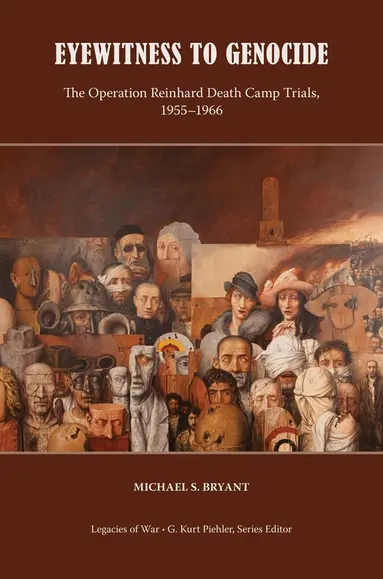
Eyewitness to Genocide
- Vikt 0,43 kg
299 krhos Bokus · exkl. frakt
90 kr skillnad mellan billigaste och dyraste butik i lager
Dubbelkollat idag
Jämför 2 butiker
- Bokus, 299 kr, frakt enligt butiken. Till butik (öppnas i ny flik)
I lagerFrakt: se butikenDubbelkollad 18:51
299 kr
Lägst
- Akademibokhandeln, 389 kr, frakt enligt butiken. Till butik (öppnas i ny flik)
I lagerFrakt: se butikenDubbelkollad 19:19
389 kr

Priser från butikernas flöden kan ha ändrats: det är priset hos butiken som gäller, så kontrollera det innan du handlar.
Prishistorik
Köp nu eller vänta?
Just nu kostar produkten 299 kr — 6 kr över det lägsta vi sett på 1 månad.
Under den tiden har det oftast legat runt 290–300 kr.
Pris idag
299 kr
- Lägst
- 293 kr
- Snitt
- 296 kr
- Högst
- 300 kr
| 2026-09-15 | 297 kr · Lägst hos Bokus |
|---|---|
| 2026-09-17 | 294 kr · Lägst hos Bokus |
| 2026-09-20 | 293 kr · Lägst hos Bokus |
| 2026-09-23 | 294 kr · Lägst hos Bokus |
| 2026-09-25 | 293 kr · Lägst hos Bokus |
| 2026-10-02 | 295 kr · Lägst hos Bokus |
| 2026-10-08 | 299 kr · Lägst hos Bokus |
| 2026-10-10 | 300 kr · Lägst hos Bokus |
| 2026-10-11 | 299 kr · Lägst hos Bokus |
| 2026-10-12 | 297 kr · Lägst hos Bokus |
| 2026-10-16 | 299 kr · Lägst hos Bokus |
| 2026-10-17 | 298 kr · Lägst hos Bokus |
| 2026-10-24 | 299 kr · Lägst hos Bokus |
Om produkten
Eyewitness to Genocide
Läs merLäs mindre
One of the deadliest phases of the Holocaust, the Nazi regime's "Operation Reinhard" produced three major death camps-Belzec, Treblinka, and Sobibor-which claimed the lives of 1.8 million Jews. In the 1960s, a small measure of justice came for those victims when a score of defendants who had been officers and guards at the camps were convicted of war crimes in West German courts. The conviction rates varied, however. While all but one of fourteen Treblinka defendants were convicted, half of the twelve Sobibor defendants escaped punishment, and only one of eight Belzec defendants was convicted. Also, despite the enormity of the crimes, the sentences were light in many cases, amounting to only a few years in prison.In this meticulous history of the Operation Reinhard trials, Michael S. Bryant examines a disturbing question: Did compromised jurists engineer acquittals or lenient punishments for proven killers? Drawing on rarely studied archival sources, Bryant concludes that the trial judges acted in good faith within the bounds of West German law. The key to successful prosecutions was eyewitness testimony. At Belzec, the near-total efficiency of the Nazi death machine meant that only one survivor could be found to testify. At Treblinka and Sobibor, however, prisoner revolts had resulted in a number of survivors who could give firsthand accounts of specific atrocities and identify participants. The courts, Bryant finds, treated these witnesses with respect and even made allowances for conflicting testimony. And when handing down sentences, the judges acted in accordance with strict legal definitions of perpetration, complicity, and action under duress.Yet, despite these findings, Bryant also shows that West German legal culture was hardly blameless during the postwar era. Though ready to convict the mostly working class personnel of the death camps, the Federal Republic followed policies that insulated the judicial elite from accountability for its own role in the Final Solution. While trial records show that the "bias" of West German jurists was neither direct nor personal, the structure of the system ensured that lawyers and judges themselves avoided judgment.
Specifikationer
Fakta
- Vikt
- 0,43 kg
- GTIN
- 09781621902621
Uppgifter från tillverkare och butiker.