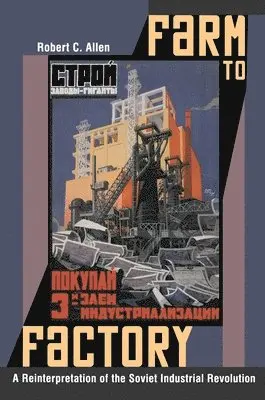
Farm to Factory
- Vikt 0,45 kg
584 krhos Bokus · exkl. frakt
175 kr skillnad mellan billigaste och dyraste butik i lager
Dubbelkollade priser
Jämför 3 butiker
- Bokus, 584 kr, frakt enligt butiken. Till butik (öppnas i ny flik)
I lagerFrakt: se butikenDubbelkollad 20:51
584 kr
Lägst
- Akademibokhandeln, 759 kr, frakt enligt butiken. Till butik (öppnas i ny flik)
I lagerFrakt: se butikenDubbelkollad 20:53
759 kr
- Adlibris, 584 kr, frakt enligt butiken. Till butik (öppnas i ny flik)
Slut i lagerFrakt: se butikenDubbelkollad 27 okt. 09:10
584 kr


Priser från butikernas flöden kan ha ändrats: det är priset hos butiken som gäller, så kontrollera det innan du handlar.
Prishistorik
Köp nu eller vänta?
Just nu kostar produkten 584 kr — 118 kr över det lägsta vi sett på 1 månad.
Under den tiden har det oftast legat runt 470–580 kr.
Pris idag
584 kr
- Lägst
- 466 kr
- Snitt
- 544 kr
- Högst
- 584 kr
| 2026-09-15 | 584 kr · Lägst hos Bokus |
|---|---|
| 2026-09-21 | 467 kr · Lägst hos Bokus |
| 2026-09-23 | 466 kr · Lägst hos Bokus |
| 2026-09-25 | 584 kr · Lägst hos Bokus |
| 2026-10-11 | 476 kr · Lägst hos Bokus |
| 2026-10-13 | 474 kr · Lägst hos Bokus |
| 2026-10-15 | 584 kr · Lägst hos Bokus |
| 2026-10-19 | 474 kr · Lägst hos Bokus |
| 2026-10-20 | 471 kr · Lägst hos Bokus |
| 2026-10-23 | 470 kr · Lägst hos Bokus |
| 2026-10-27 | 584 kr · Lägst hos Bokus |
Om produkten
Farm to Factory
Läs merLäs mindre
To say that history's greatest economic experiment--Soviet communism--was also its greatest economic failure is to say what many consider obvious. Here, in a startling reinterpretation, Robert Allen argues that the USSR was one of the most successful developing economies of the twentieth century. He reaches this provocative conclusion by recalculating national consumption and using economic, demographic, and computer simulation models to address the "what if" questions central to Soviet history. Moreover, by comparing Soviet performance not only with advanced but with less developed countries, he provides a meaningful context for its evaluation. Although the Russian economy began to develop in the late nineteenth century based on wheat exports, modern economic growth proved elusive. But growth was rapid from 1928 to the 1970s--due to successful Five Year Plans. Notwithstanding the horrors of Stalinism, the building of heavy industry accelerated growth during the 1930s and raised living standards, especially for the many peasants who moved to cities. A sudden drop in fertility due to the education of women and their employment outside the home also facilitated growth.While highlighting the previously underemphasized achievements of Soviet planning, Farm to Factory also shows, through methodical analysis set in fluid prose, that Stalin's worst excesses--such as the bloody collectivization of agriculture--did little to spur growth. Economic development stagnated after 1970, as vital resources were diverted to the military and as a Soviet leadership lacking in original thought pursued wasteful investments.
Specifikationer
Fakta
- Vikt
- 0,45 kg
- GTIN
- 09780691144313
Uppgifter från tillverkare och butiker.