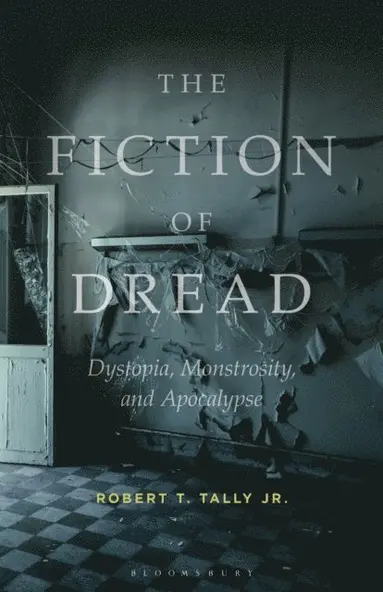
Fiction of Dread
Dubbelkollat idag
Jämför 1 butik
- Bokus, 377 kr, frakt enligt butiken. Till butik (öppnas i ny flik)
I lagerFrakt: se butikenDubbelkollad 10:51
377 kr
Lägst

Priser från butikernas flöden kan ha ändrats: det är priset hos butiken som gäller, så kontrollera det innan du handlar.
Prishistorik
Köp nu eller vänta?
Just nu kostar produkten 377 kr — 18 kr över det lägsta vi sett på 1 månad.
Under den tiden har det oftast legat runt 360–370 kr.
Pris idag
377 kr
- Lägst
- 359 kr
- Snitt
- 365 kr
- Högst
- 377 kr
| 2026-09-15 | 359 kr · Lägst hos Bokus |
|---|---|
| 2026-09-26 | 368 kr · Lägst hos Bokus |
| 2026-09-27 | 359 kr · Lägst hos Bokus |
| 2026-10-13 | 368 kr · Lägst hos Bokus |
| 2026-10-19 | 369 kr · Lägst hos Bokus |
| 2026-10-22 | 377 kr · Lägst hos Bokus |
Om produkten
Fiction of Dread
Läs merLäs mindre
A history and examination of dystopia and angst in popular culture that speaks to our current climate of dread.At the dawn of the 20th century, a wide-ranging utopianism dominated popular and intellectual cultures throughout Europe and America. However, in the aftermathof the World Wars, with such canonical examples as Brave New World and Nineteen-Eighty-Four, dystopia emerged as a dominant genre, in literature and in social thought. The continuing presence and eventual dominance of dystopian themes in popular culture-e.g., dismal authoritarian future states, sinister global conspiracies, post-apocalyptic landscapes, a proliferation of horrific monsters, and end-of-the-world fantasies-have confirmed the degree to which the 21st is also a dystopian century.Drawing on literature as varied as H.G. Wells's The Time Machine, Neil Gaiman's American Gods, and Suzanne Collins's The Hunger Games, and on TV and film such as The Walking Dead, Black Mirror, and The Last of Us, Robert T. Tally Jr. explores the landscape of angst created by the monstrous accumulation of dystopian material. The Fiction of Dread provides an innovative reading of contemporary culture and offers an alternative vision for critical theory and practice at a moment when, as has been famously observed, it is easier to imagine the end of the world than the end of capitalism.