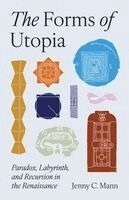
Forms of Utopia
1 855 krhos Bokus · exkl. frakt
554 kr skillnad mellan billigaste och dyraste butik i lager
Dubbelkollat idag
Jämför 2 butiker
- Bokus, 1 855 kr, frakt enligt butiken. Till butik (öppnas i ny flik)
I lagerFrakt: se butikenDubbelkollad 18:51
1 855 kr
Lägst
- Akademibokhandeln, 2 409 kr, frakt enligt butiken. Till butik (öppnas i ny flik)
I lagerFrakt: se butikenDubbelkollad 19:19
2 409 kr

Priser från butikernas flöden kan ha ändrats: det är priset hos butiken som gäller, så kontrollera det innan du handlar.
Prishistorik
Köp nu eller vänta?
Just nu kostar produkten 1 855 kr — 71 kr över det lägsta vi sett på 2 veckor.
Under den tiden har det oftast legat runt 1 780–1 860 kr.
Pris idag
1 855 kr
- Lägst
- 1 784 kr
- Snitt
- 1 849 kr
- Högst
- 2 319 kr
| 2026-09-30 | 2 319 kr · Lägst hos Akademibokhandeln |
|---|---|
| 2026-10-01 | 1 784 kr · Lägst hos Bokus |
| 2026-10-09 | 1 855 kr · Lägst hos Bokus |
Om produkten
Forms of Utopia
Läs merLäs mindre
A new analysis of utopia as a literary form, with recursive patterns that draw from early modern logic and mathematicsIn this ingenious and provocative book, Jenny Mann asks us to shift our understanding of utopia from its politics to its form. Beginning with Thomas More's Utopia (1516), one of the most influential books of all time, Mann shows that utopia's recursive patterns-its frames, folds, knots, meanders, and turns-enable the perpetual invention of limitless artificial worlds.Mann demonstrates how paradox, labyrinth, and recursion, in the hands of More, William Shakespeare, and Margaret Cavendish, become techniques of utopian invention. Drawing on concepts from logic and mathematics, including the Liar's Paradox and the conundrum of squaring the circle, to make sense of utopia's impossible geometries, she offers fresh and illuminating considerations of More's Utopia, Shakespeare's The Tempest, and Cavendish's The Blazing World, each representing a different form of utopia. These sections are framed by interludes that feature an artwork or artifact-an intarsia-paneled door, a turf maze, a silver coin-that materially expresses an element of utopia's puzzling structure. To study utopia, she argues, we must enter its structure and follow the disorienting paths. Utopia works by transforming enclosed spaces-a book, a play-into sites of infinite possibility.