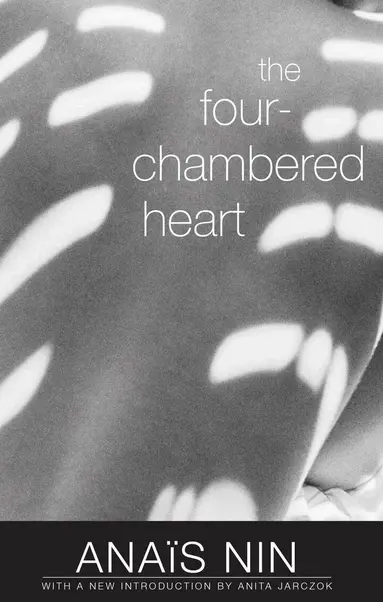
Four-Chambered Heart
- Vikt 0,25 kg
218 krhos Bokus · exkl. frakt
61 kr skillnad mellan billigaste och dyraste butik i lager
Dubbelkollade priser
Jämför 3 butiker
- Bokus, 218 kr, frakt enligt butiken. Till butik (öppnas i ny flik)
I lagerFrakt: se butikenDubbelkollad 05:51
218 kr
Lägst
- Akademibokhandeln, 279 kr, frakt enligt butiken. Till butik (öppnas i ny flik)
I lagerFrakt: se butikenDubbelkollad 05:53
279 kr
- Adlibris, 188 kr plus 35 kr frakt. Till butik (öppnas i ny flik)
Slut i lagerFrakt 35 krDubbelkollad 27 okt. 09:10
188 kr


Priser från butikernas flöden kan ha ändrats: det är priset hos butiken som gäller, så kontrollera det innan du handlar.
Prishistorik
Köp nu eller vänta?
Just nu kostar produkten 218 kr — 30 kr över det lägsta vi sett på 1 månad.
Under den tiden har det oftast legat runt 190–220 kr.
Pris idag
218 kr
- Lägst
- 188 kr
- Snitt
- 196 kr
- Högst
- 218 kr
| 2026-09-15 | 188 kr · Lägst hos Adlibris |
|---|---|
| 2026-10-05 | 218 kr · Lägst hos Bokus |
| 2026-10-08 | 188 kr · Lägst hos Adlibris |
| 2026-10-23 | 218 kr · Lägst hos Bokus |
Om produkten
Four-Chambered Heart
Läs merLäs mindre
The Four-Chambered Heart, Anaïs Nin's 1950 novel, recounts the real-life affair she conducted with café guitarist Gonzalo Moré in 1936. Nin and Moré rented a house-boat on the Seine, and under the pervading influence of the boat's watchman and Moré's wife Helba, developed a relationship. Moré; named the boat Nanankepichu, meaning "not really a home."In the novel, which Nin drew from her experiences on the boat, the characters' sources are clear. Djuna is an embodiment of Nin herself. A young dancer in search of fulfillment, she encapsulates all that the author was striving for at that time. The character of Djuna features in other novels, perhaps weaving a directly autobiographical thread into Nin's fiction. The gypsy musician, Rango, is therefore Moré, and his invalid wife is Zora. The old watchman is present as a force that, along with Zora, works against the lovers in their quest for happiness.Nin's main concern throughout the novel is the "exterior," and how it affects the "interior." Water is a cleverly used theme. "I have no great fear of depths," says Djuna, "and a great fear of shallow living." Rango and Djuna's relationship is, in effect, their effort to remain afloat. Often, Nin employs a stream of consciousness, especially in her flowing analyses of love, life and music, which continues the water image.Anaïs Nin's writing is typically exquisite in its detail and texture. She describes Paris: its "black lacquered cobblestones" and "silver filigree trees." The "humid scarfs of fog" on the river, and "the sharp incense of roasted chestnuts" reveal their source through their reality: Nin's personal experience.
Specifikationer
Fakta
- Vikt
- 0,25 kg
- GTIN
- 09780804012454
Uppgifter från tillverkare och butiker.