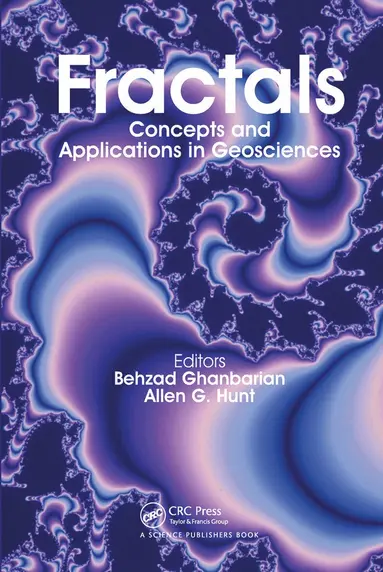
Fractals
- Vikt 0,75 kg
790 krhos Bokus · exkl. frakt
239 kr skillnad mellan billigaste och dyraste butik i lager
Dubbelkollat idag
Jämför 2 butiker
- Bokus, 790 kr, frakt enligt butiken. Till butik (öppnas i ny flik)
I lagerFrakt: se butikenDubbelkollad 09:51
790 kr
Lägst
- Akademibokhandeln, 1 029 kr, frakt enligt butiken. Till butik (öppnas i ny flik)
I lagerFrakt: se butikenDubbelkollad 09:53
1 029 kr

Priser från butikernas flöden kan ha ändrats: det är priset hos butiken som gäller, så kontrollera det innan du handlar.
Prishistorik
Köp nu eller vänta?
Just nu kostar produkten 790 kr — 12 kr över det lägsta vi sett på 1 månad.
Under den tiden har det oftast legat runt 780–790 kr.
Pris idag
790 kr
- Lägst
- 778 kr
- Snitt
- 788 kr
- Högst
- 798 kr
| 2026-09-15 | 785 kr · Lägst hos Bokus |
|---|---|
| 2026-09-17 | 783 kr · Lägst hos Bokus |
| 2026-09-19 | 782 kr · Lägst hos Bokus |
| 2026-09-20 | 780 kr · Lägst hos Bokus |
| 2026-09-23 | 781 kr · Lägst hos Bokus |
| 2026-09-25 | 779 kr · Lägst hos Bokus |
| 2026-09-27 | 778 kr · Lägst hos Bokus |
| 2026-09-30 | 780 kr · Lägst hos Bokus |
| 2026-10-05 | 789 kr · Lägst hos Bokus |
| 2026-10-07 | 797 kr · Lägst hos Bokus |
| 2026-10-10 | 796 kr · Lägst hos Bokus |
| 2026-10-11 | 793 kr · Lägst hos Bokus |
| 2026-10-12 | 791 kr · Lägst hos Bokus |
| 2026-10-17 | 794 kr · Lägst hos Bokus |
| 2026-10-18 | 793 kr · Lägst hos Bokus |
| 2026-10-24 | 794 kr · Lägst hos Bokus |
| 2026-10-25 | 795 kr · Lägst hos Bokus |
| 2026-10-28 | 798 kr · Lägst hos Bokus |
| 2026-10-30 | 795 kr · Lägst hos Bokus |
| 2026-11-01 | 790 kr · Lägst hos Bokus |
Om produkten
Fractals
Läs merLäs mindre
This book provides theoretical concepts and applications of fractals and multifractals to a broad range of audiences from various scientific communities, such as petroleum, chemical, civil and environmental engineering, atmospheric research, and hydrology. In the first chapter, we introduce fractals and multifractals from physics and math viewpoints. We then discuss theory and practical applications in detail. In what follows, in chapter 2, fragmentation process is modeled using fractals. Fragmentation is the breaking of aggregates into smaller pieces or fragments, a typical phenomenon in nature. In chapter 3, the advantages and disadvantages of two- and three-phase fractal models are discussed in detail. These two kinds of approach have been widely applied in the literature to model different characteristics of natural phenomena. In chapter 4, two- and three-phase fractal techniques are used to develop capillary pressure curve models, which characterize pore-size distribution of porous media. Percolation theory provides a theoretical framework to model flow and transport in disordered networks and systems. Therefore, following chapter 4, in chapter 5 the fractal basis of percolation theory and its applications in surface and subsurface hydrology are discussed. In chapter 6, fracture networks are shown to be modeled using fractal approaches. Chapter 7 provides different applications of fractals and multifractals to petrophysics and relevant area in petroleum engineering. In chapter 8, we introduce the practical advantages of fractals and multifractals in geostatistics at large scales, which have broad applications in stochastic hydrology and hydrogeology. Multifractals have been also widely applied to model atmospheric characteristics, such as precipitation, temperature, and cloud shape. In chapter 9, these kinds of properties are addressed using multifractals. At watershed scales, river networks have been shown to follow fractal behavior. Therefore, the applications of fractals are addressed in chapter 10. Time series analysis has been under investigations for several decades in physics, hydrology, atmospheric research, civil engineering, and water resources. In chapter 11, we therefore, provide fractal, multifractal, multifractal detrended fluctuation analyses, which can be used to study temporal characterization of a phenomenon, such as flow discharge at a specific location of a river. Chapter 12 addresses signals and again time series using a novel fractal Fourier analysis. In chapter 13, we discuss constructal theory, which has a perspective opposite to fractal theories, and is based on optimizationof diffusive exchange. In the case of river drainages, for example, the constructal approach begins at the divide and generates headwater streams first, rather than starting from the fundamental drainage pattern.
Specifikationer
Fakta
- Vikt
- 0,75 kg
- GTIN
- 09780367781705
Uppgifter från tillverkare och butiker.