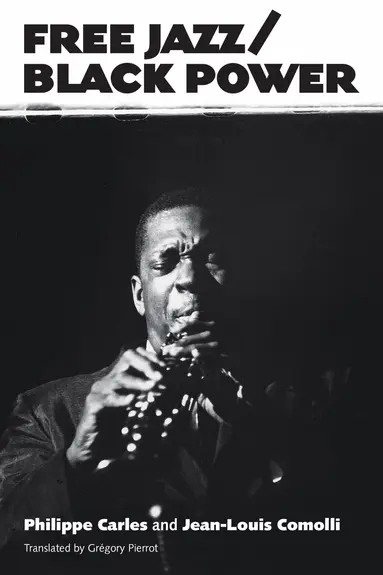
Free Jazz/Black Power
- Vikt 0,41 kg
395 krhos Bokus · exkl. frakt
114 kr skillnad mellan billigaste och dyraste butik i lager
Dubbelkollade priser
Jämför 3 butiker
- Bokus, 395 kr, frakt enligt butiken. Till butik (öppnas i ny flik)
I lagerFrakt: se butikenDubbelkollad 10:51
395 kr
Lägst
- Akademibokhandeln, 509 kr, frakt enligt butiken. Till butik (öppnas i ny flik)
I lagerFrakt: se butikenDubbelkollad 09:53
509 kr
- Adlibris, 352 kr, frakt enligt butiken. Till butik (öppnas i ny flik)
Slut i lagerFrakt: se butikenDubbelkollad 27 okt. 09:10
352 kr


Priser från butikernas flöden kan ha ändrats: det är priset hos butiken som gäller, så kontrollera det innan du handlar.
Prishistorik
Köp nu eller vänta?
Just nu kostar produkten 395 kr — 43 kr över det lägsta vi sett på 1 månad.
Under den tiden har det oftast legat runt 350–400 kr.
Pris idag
395 kr
- Lägst
- 352 kr
- Snitt
- 375 kr
- Högst
- 399 kr
| 2026-09-15 | 352 kr · Lägst hos Adlibris |
|---|---|
| 2026-10-08 | 397 kr · Lägst hos Bokus |
| 2026-10-11 | 398 kr · Lägst hos Bokus |
| 2026-10-12 | 395 kr · Lägst hos Bokus |
| 2026-10-16 | 397 kr · Lägst hos Bokus |
| 2026-10-17 | 396 kr · Lägst hos Bokus |
| 2026-10-22 | 395 kr · Lägst hos Bokus |
| 2026-10-24 | 397 kr · Lägst hos Bokus |
| 2026-10-27 | 398 kr · Lägst hos Bokus |
| 2026-10-28 | 399 kr · Lägst hos Bokus |
| 2026-10-29 | 398 kr · Lägst hos Bokus |
| 2026-11-01 | 395 kr · Lägst hos Bokus |
Om produkten
Free Jazz/Black Power
Läs merLäs mindre
For the first time in English, the classic volume that developed a radical new understanding of free jazz and African American culture.1971, French jazz critics Philippe Carles and Jean-Louis Comolli cowrote Free Jazz/Black Power, a treatise on the racial and political implications of jazz and jazz criticism. It remains a testimony to the long ignored encounter of radical African American music and French left-wing criticism. Carles and Comolli set out to defend a genre vilified by jazz critics on both sides of the Atlantic by exposing the new sound's ties to African American culture, history, and the political struggle that was raging in the early 1970s. The two offered a political and cultural history of black presence in the United States to shed more light on the dubious role played by jazz criticism in racial oppression.This analysis critiques the critics, building a work of cultural studies in a time and place where the practice was virtually unknown. The authors reached radical conclusions--free jazz was a revolutionary reaction against white domination, was the musical counterpart to the Black Power movement, and was a music that demanded a similar political commitment. The impact of this book is difficult to overstate, as it made readers reconsider their response to African American music. In some cases it changed the way musicians thought about and played jazz. Free Jazz/ Black Power remains indispensable to the study of the relation of American free jazz to European audiences, critics, and artists.
Specifikationer
Fakta
- Vikt
- 0,41 kg
- GTIN
- 09781496807793
Uppgifter från tillverkare och butiker.