Louisiana State University Press
From Bauhaus to Ecohouse
- Vikt 0,3 kg
Bra pris nuLägsta priset på 1 månad
279 kr299 kr−6% senaste veckanhos Buyersclub · exkl. frakt
Jämfört med det lägsta pris vi sett de 30 dagarna före sänkningen.
140 kr skillnad mellan billigaste och dyraste butik i lager
Dubbelkollat idag
Jämför 3 butiker
- Buyersclub, 279 kr, frakt enligt butiken. Till butik (öppnas i ny flik)
I lagerKampanjFrakt: se butikenDubbelkollad 05:00
279 kr
Lägst
- Bokus, 321 kr, frakt enligt butiken. Till butik (öppnas i ny flik)
I lagerFrakt: se butikenDubbelkollad 22:51
321 kr
- Akademibokhandeln, 419 kr, frakt enligt butiken. Till butik (öppnas i ny flik)
I lagerFrakt: se butikenDubbelkollad 22:53
419 kr


Priser från butikernas flöden kan ha ändrats: det är priset hos butiken som gäller, så kontrollera det innan du handlar.
Prishistorik
Köp nu eller vänta?
Just nu kostar produkten 279 kr — det lägsta vi sett på 1 månad.
Under den tiden har det oftast legat runt 320–340 kr.
Pris idag
279 kr
- Lägst
- 279 kr
- Snitt
- 328 kr
- Högst
- 343 kr
| 2026-09-15 | 340 kr · Lägst hos Bokus |
|---|---|
| 2026-09-17 | 337 kr · Lägst hos Bokus |
| 2026-09-20 | 336 kr · Lägst hos Bokus |
| 2026-09-23 | 337 kr · Lägst hos Bokus |
| 2026-09-25 | 336 kr · Lägst hos Bokus |
| 2026-09-27 | 335 kr · Lägst hos Bokus |
| 2026-09-30 | 336 kr · Lägst hos Bokus |
| 2026-10-04 | 340 kr · Lägst hos Bokus |
| 2026-10-08 | 343 kr · Lägst hos Bokus |
| 2026-10-09 | 342 kr · Lägst hos Bokus |
| 2026-10-12 | 341 kr · Lägst hos Bokus |
| 2026-10-16 | 343 kr · Lägst hos Bokus |
| 2026-10-18 | 321 kr · Lägst hos Bokus |
| 2026-10-20 | 299 kr · Lägst hos Buyersclub |
| 2026-10-28 | 279 kr · Lägst hos Buyersclub |
Om produkten
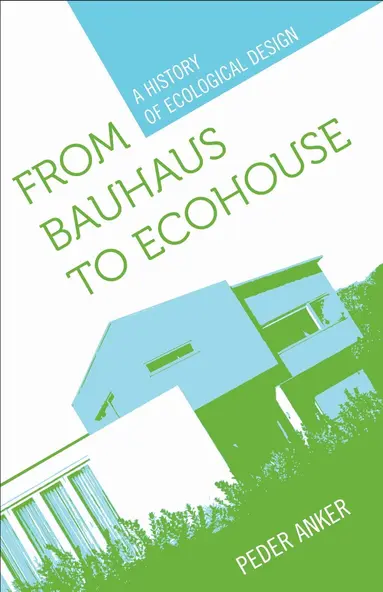
From Bauhaus to Ecohouse
Läs merLäs mindre
Global warming and concerns about sustainability recently have pushed ecological design to the forefront of architectural study and debate. As Peder Anker explains in From Bauhaus to Ecohouse, despite claims of novelty, debates about environmentally sensitive architecture have been ongoing for nearly a century. By exploring key moments of inspiration between designers and ecologists from the Bauhaus projects of the interwar period to the eco-arks of the 1980s, Anker traces the historical intersection of architecture and ecological science and assesses how both remain intertwined philosophically and pragmatically within the still-evolving field of ecological design. The idea that science could improve human life attracted architects and designers who looked to the science of ecology to better their methodologies. Walter Gropius, the founder of the Bauhaus school, taught that designed form should follow the laws of nature in order to function effectively. With the Bauhaus movement, ecology and design merged and laid the foundation of modernist architecture. Anker discusses in detail how the former faculty members of the Bauhaus school-including László Maholy-Nagy and Herbert Bayer-left Nazi Germany in the mid-1930s and engaged with ecologists during their "London period" and in the U.S. A subsequent generation of students and admirers of Bauhaus, such as Richard Buckminster Fuller and Ian McHarg, picked up their program, and-under the general banner of merging art and science in the design process-Bauhaus-minded architects began to think ecologically while some ecologists lent their ideas to design. Anker charts complicated currents of ecological design thought spanning pre-and post-World War II and through the cold war, including pivotal changes such as the emergence of space exploration and new theories on closed-system living in space capsules, space stations, and planetary colonies. Space ecology, Anker explains, inspired leading landscape designers of the 1970s, who used the imagined life of astronauts as a model for how humans should live in harmony with nature. Theories of how to design for extraterrestrial living impacted design and ecological thinking for earth-based living as well, as evidenced in Disney's Spaceship Earth attraction as well as in the Biosphere 2 experiments in Arizona in the early 1990s. Illuminating important connections between theories about the relationship between humans and the built environment, Anker's provocative study provides new insight into a critical period in the evolution of environmental awareness.
Specifikationer
Fakta
- Vikt
- 0,3 kg
- GTIN
- 09780807188736
Uppgifter från tillverkare och butiker.