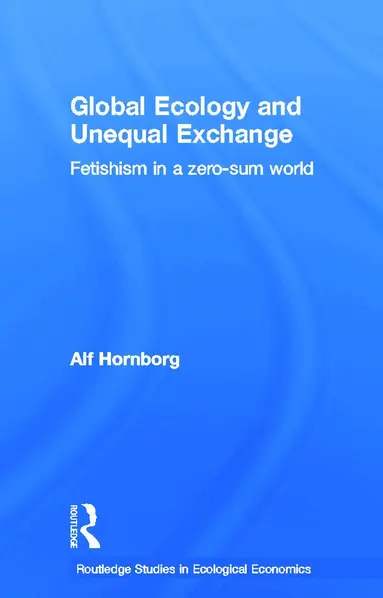
Global Ecology and Unequal Exchange
- Vikt 0,38 kg
769 krhos Bokus · exkl. frakt
230 kr skillnad mellan billigaste och dyraste butik i lager
Dubbelkollat idag
Jämför 2 butiker
- Bokus, 769 kr, frakt enligt butiken. Till butik (öppnas i ny flik)
I lagerFrakt: se butikenDubbelkollad 05:51
769 kr
Lägst
- Akademibokhandeln, 999 kr, frakt enligt butiken. Till butik (öppnas i ny flik)
I lagerFrakt: se butikenDubbelkollad 05:53
999 kr

Priser från butikernas flöden kan ha ändrats: det är priset hos butiken som gäller, så kontrollera det innan du handlar.
Prishistorik
Köp nu eller vänta?
Just nu kostar produkten 769 kr — 11 kr över det lägsta vi sett på 1 månad.
Under den tiden har det oftast legat runt 760–770 kr.
Pris idag
769 kr
- Lägst
- 758 kr
- Snitt
- 767 kr
- Högst
- 776 kr
| 2026-09-15 | 764 kr · Lägst hos Bokus |
|---|---|
| 2026-09-16 | 762 kr · Lägst hos Bokus |
| 2026-09-18 | 761 kr · Lägst hos Bokus |
| 2026-09-20 | 759 kr · Lägst hos Bokus |
| 2026-09-22 | 760 kr · Lägst hos Bokus |
| 2026-09-24 | 758 kr · Lägst hos Bokus |
| 2026-09-30 | 759 kr · Lägst hos Bokus |
| 2026-10-02 | 764 kr · Lägst hos Bokus |
| 2026-10-04 | 767 kr · Lägst hos Bokus |
| 2026-10-07 | 775 kr · Lägst hos Bokus |
| 2026-10-09 | 774 kr · Lägst hos Bokus |
| 2026-10-10 | 772 kr · Lägst hos Bokus |
| 2026-10-11 | 770 kr · Lägst hos Bokus |
| 2026-10-17 | 772 kr · Lägst hos Bokus |
| 2026-10-20 | 771 kr · Lägst hos Bokus |
| 2026-10-23 | 773 kr · Lägst hos Bokus |
| 2026-10-28 | 776 kr · Lägst hos Bokus |
| 2026-10-31 | 769 kr · Lägst hos Bokus |
Om produkten
In modern society, we tend to have faith in technology
Läs merLäs mindre
But is our concept of 'technology' itself a cultural illusion? This book challenges the idea that humanity as a whole is united in a common development toward increasingly efficient technologies. Instead it argues that modern technology implies a kind of global 'zero-sum game' involving uneven resource flows, which make it possible for wealthier parts of global society to save time and space at the expense of humans and environments in the poorer parts. We tend to think of the functioning of machines as if it was detached from the social relations of exchange which make machines economically and physically possible (in some areas). But even the steam engine that was the core of the Industrial Revolution in England was indissolubly linked to slave labour and soil erosion in distant cotton plantations. And even as seemingly benign a technology as railways have historically saved time (and accessed space) primarily for those who can afford them, but at the expense of labour time and natural space lost for other social groups with less purchasing power. The existence of technology, in other words, is not a cornucopia signifying general human progress, but the unevenly distributed result of unequal resource transfers that the science of economics is not equipped to perceive. Technology is not simply a relation between humans and their natural environment, but more fundamentally a way of organizing global human society. From the very start it has been a global phenomenon, which has intertwined political, economic and environmental histories in complex and inequitable ways. This book unravels these complex connections and rejects the widespread notion that technology will make the world sustainable. Instead it suggests a radical reform of money, which would be as useful for achieving sustainability as for avoiding financial breakdown.It brings together various perspectives from environmental and economic anthropology, ecological economics, political ecology, world-system analysis, fetishism theory, semiotics, environmental and economic history, and development theory. Its main contribution is a new understanding of technological development and concerns about global sustainability as questions of power and uneven distribution, ultimately deriving from the inherent logic of general-purpose money. It should be of interest to students and professionals with a background or current engagement in anthropology, sustainability studies, environmental history, economic history, or development studies.
Specifikationer
Fakta
- Vikt
- 0,38 kg
- GTIN
- 09780415659284
Uppgifter från tillverkare och butiker.