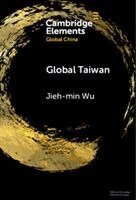
Global Taiwan
903 krhos Bokus · exkl. frakt
266 kr skillnad mellan billigaste och dyraste butik i lager
Dubbelkollade priser
Jämför 2 butiker
- Bokus, 903 kr, frakt enligt butiken. Till butik (öppnas i ny flik)
I lagerFrakt: se butikenDubbelkollad 16 okt. 23:51
903 kr
Lägst
- Akademibokhandeln, 1 169 kr, frakt enligt butiken. Till butik (öppnas i ny flik)
I lagerFrakt: se butikenDubbelkollad 16 okt. 23:53
1 169 kr

Priser från butikernas flöden kan ha ändrats: det är priset hos butiken som gäller, så kontrollera det innan du handlar.
Prishistorik
Köp nu eller vänta?
Just nu kostar produkten 903 kr — 19 kr över det lägsta vi sett på 2 veckor.
Under den tiden har det oftast legat runt 880–900 kr.
Pris idag
903 kr
- Lägst
- 884 kr
- Snitt
- 911 kr
- Högst
- 1 149 kr
| 2026-10-01 | 1 149 kr · Lägst hos Akademibokhandeln |
|---|---|
| 2026-10-02 | 884 kr · Lägst hos Bokus |
| 2026-10-08 | 903 kr · Lägst hos Bokus |
Om produkten
Global Taiwan
Läs merLäs mindre
Taiwan occupies a paradoxical position in the contemporary world: A polity with unresolved sovereignty that has achieved technological centrality, democratic resilience, and a distinct national identity. This Element addresses that condition through contested globalization, arguing that economic integration is contingent on geopolitical architecture and its consequences can alter arrangements. Drawing on William Sewell's concept of eventful temporality, it identifies three postwar geopolitical periods - the Cold War, US-China détente, and strategic competition - and traces how each reconfigured Taiwan's developmental constraints and opportunities. Across political economy, civil society, and national identity, it develops the concepts of Silicon Shield paradox, double helix of civil society, and contested cosmopolitanism to illuminate small-state agency under constraint. Archival research, interviews, and protest network analysis trace cumulative, unintended processes; a three-phase survey design shows expectations about Taiwan's future are more precarious than conventional measures suggest. This title is also available as Open Access on Cambridge Core.